
Quick Summary
An effective ceiling can do much more than complete the look of an interior. The right acoustic ceiling can improve sound quality, reduce unwanted noise and create a more comfortable environment. With modern acoustic panels for ceiling, designers can combine acoustic performance with colour, texture, form and visual identity. From offices and educational spaces to hospitality and commercial interiors, ceilings are becoming an active part of interior design. This blog explores how ceiling acoustics can transform spaces from a functional necessity into a defining design feature.
Look around a contemporary interior and you will notice a significant shift in the way ceilings are designed.
For years, ceilings were primarily treated as an overhead surface that concealed services, accommodated lighting and completed the architectural envelope. Today, they are increasingly becoming an important part of the overall design strategy.
One reason behind this evolution is the growing focus on acoustic comfort.
Open offices, collaborative workspaces, restaurants, educational environments, healthcare facilities and public areas can all experience excessive reverberation and unwanted background noise. Hard surfaces such as concrete, glass, metal and exposed finishes may contribute to sound reflection, making conversations less intelligible and spaces more tiring to occupy.
This is where an acoustic ceiling can make a meaningful difference.
By introducing sound-absorbing surfaces overhead, designers can help control reflected sound while simultaneously creating an opportunity to enhance the visual character of the space.
And that is where acoustic panels for ceiling applications move beyond pure functionality.
They can become architectural elements in their own right.
When the Ceiling Becomes More Than Just a Surface
Good acoustics are not simply about making a space quieter.
The real objective is to create a sound environment where people can communicate, concentrate, collaborate and feel comfortable.
An intelligently designed acoustic ceiling can contribute to this by helping manage sound reflections and reverberation within a room.
Consider an open-plan office. Multiple conversations, phone calls, meetings and equipment sounds can overlap throughout the day. Without sufficient sound absorption, noise can travel across the space and create an uncomfortable acoustic environment.
Similarly, in restaurants, excessive reverberation can make conversations difficult. In classrooms, poor acoustics can affect speech intelligibility. In meeting rooms, unwanted reflections can interfere with clear communication.
This makes acoustic treatment an important component of contemporary interior planning.
A well-planned acoustic ceiling can support:
- Better speech intelligibility
- Reduced reverberation
- Improved acoustic comfort
- More focused work environments
- Greater privacy between activity zones
- Enhanced occupant experience
- Greater design flexibility
The result is a space that doesn’t merely look good as it sounds better too.
Acoustic Panels for Ceiling Are Redefining Overhead Design
The biggest change in ceiling design is perhaps the move from concealment to expression.
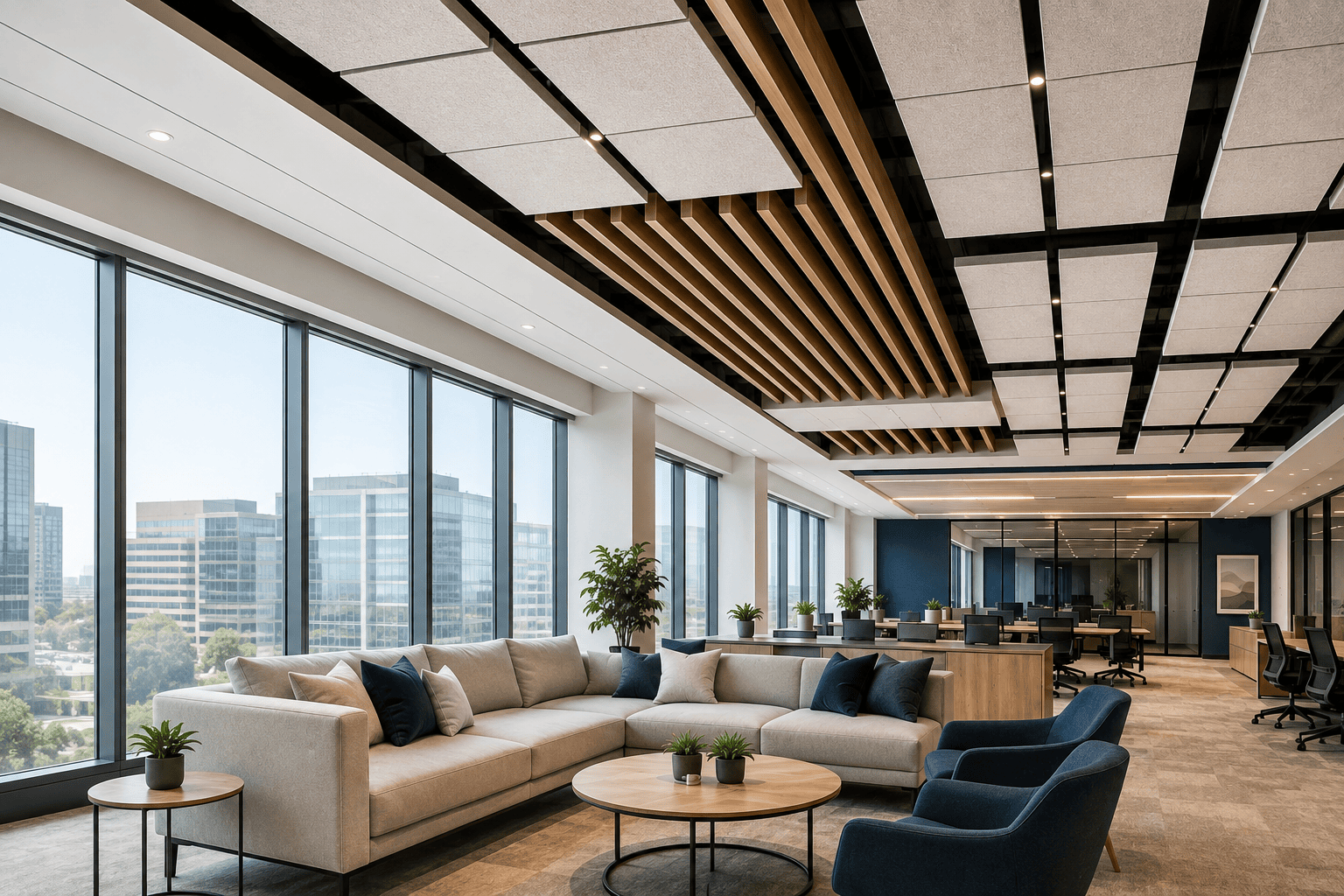
Modern acoustic panels for ceiling are available in different shapes, sizes, colours, textures and configurations. This allows designers to treat the ceiling as an active design layer rather than a background element.
Instead of asking, “How can we hide the ceiling?”, designers can ask:
“How can the ceiling become part of the story of the space?”
That change in perspective opens up numerous creative possibilities.
-
From flat surfaces to floating forms
Suspended acoustic elements can introduce depth and dimension into interiors. Individual panels can appear to float below the structural ceiling, creating visual layers while contributing to sound absorption.
-
From uniformity to rhythm
Linear baffles, repeated panels and modular acoustic elements can establish rhythm across large spaces. Their arrangement can complement lighting layouts, furniture planning and circulation paths.
-
From plain functionality to visual identity
Acoustic surfaces can also introduce colour and texture. Instead of treating acoustic treatment as something that needs to blend into the background, designers can use it to reinforce a project’s visual language.
This is where acoustic ceiling design becomes a creative exercise.
Design Meets Performance With Acoustic Ceiling Solutions
A successful ceiling treatment should balance two key requirements:
Acoustic performance + visual appeal
Focusing on only one can limit the overall result.
A ceiling that performs acoustically but looks disconnected from the interior may compromise the design intent. Conversely, a visually striking ceiling that does not address the room’s acoustic requirements may fail to deliver the desired occupant experience.
The solution lies in integrating acoustic planning with interior design from the beginning.
Think beyond the ceiling plane
Instead of considering acoustic panels for ceiling only as individual products, designers can view them as part of a larger acoustic strategy.
This may involve considering:
- Room size and volume
- Existing hard surfaces
- Occupancy levels
- Furniture and soft furnishings
- Noise-generating activities
- Speech requirements
- Reverberation characteristics
- Ceiling height
- Lighting and MEP coordination
- Overall design language
This holistic approach helps create acoustic environments that feel intentional rather than added as an afterthought.
5 Ways Acoustic Panels for Ceiling Can Transform Interiors
1. Create Visual Layers
Suspended ceiling panels can break the monotony of a large ceiling plane.
Different heights, orientations and configurations can create a layered appearance, adding architectural depth while helping manage reflected sound.
This approach works particularly well in large offices, lounges, reception areas and collaborative spaces.
2. Define Different Zones
Open-plan spaces often need subtle visual and acoustic zoning.
Strategically positioned acoustic panels for ceiling can help distinguish areas such as:
- Collaboration zones
- Focus areas
- Informal meeting spaces
- Reception areas
- Cafeterias
- Breakout zones
The ceiling therefore becomes part of the spatial planning strategy.
3. Add Colour and Character
Acoustic treatment does not have to mean neutral interiors.
Panels can be incorporated into colour palettes that complement furniture, walls, flooring and brand identity. Carefully selected colours can create visual accents, establish hierarchy or reinforce a particular mood.
4. Introduce Texture
Texture adds another dimension to ceiling design.
Grooved, patterned or layered acoustic surfaces can create visual interest while maintaining a cohesive material palette.
This allows designers to bring tactile qualities into spaces without compromising acoustic functionality.
5. Integrate With Lighting
One of the most effective ways to create a cohesive acoustic ceiling is to coordinate acoustic elements with lighting.
Pendant lights, linear fixtures and recessed lighting can work alongside suspended acoustic panels to create a carefully composed overhead landscape.
The result can feel less like a collection of building components and more like a unified architectural feature.
Choosing the Right Acoustic Panels for Ceiling
Not every room has the same acoustic requirement, and not every ceiling solution will produce the same result.
Before selecting acoustic panels for ceiling, consider the following factors:
Acoustic requirement:
Understand the room’s sound absorption and reverberation requirements before selecting a solution.
Aesthetic direction:
Consider whether the ceiling should blend in, create contrast or become a visual focal point.
Panel configuration:
Determine whether a flat panel, baffle, cloud or another suspended configuration suits the space.
Material and finish:
Look at texture, colour, durability and maintenance requirements alongside acoustic performance.
Ceiling coordination:
Ensure that acoustic elements work with lighting, HVAC, sprinklers, electrical systems and other services.
Installation requirements:
Consider accessibility, suspension systems and future maintenance during the design stage.
The best acoustic ceiling solution is therefore not simply the one that absorbs sound but the one that works seamlessly with the entire space.
From Noise Control to Design Expression
The evolution of acoustic panels for ceiling reflects a broader change in interior design.
Today, performance is increasingly expected to coexist with aesthetics.
Materials need to perform, but they also need to communicate. They need to support occupant comfort while contributing to the identity of the environment.
This is particularly relevant in workplaces and commercial interiors where design has become closely connected with experience.
A ceiling can influence how spacious a room feels. It can establish rhythm. It can create visual focus. It can support zoning. It can complement lighting. And, when acoustically engineered, it can help create a more comfortable sound environment.
That makes the acoustic ceiling more than a technical solution.
It becomes part of the architecture.
Designing the Ceiling as the Fifth Wall
Interior designers often describe the ceiling as the “fifth wall” because of its significant influence on the perception of a space.
An acoustic ceiling takes this idea one step further by combining visual and acoustic functions.
Instead of treating the ceiling as an empty plane above eye level, designers can use it to:
- Create identity
- Establish rhythm
- Improve acoustic comfort
- Support spatial zoning
- Enhance material palettes
- Coordinate architectural services
- Strengthen the overall design narrative
This perspective encourages a more integrated approach to interior design where every surface has a purpose.
Why Tranquil Global Believes Acoustics Should Inspire Design
At Tranquil Global, acoustic solutions are approached as an opportunity to bring together performance, functionality and design expression.
The objective is not simply to add acoustic treatment to a completed interior. Instead, acoustic solutions can be considered as part of the design language from the outset.
Whether the requirement is a subtle acoustic intervention or a visually distinctive ceiling feature, the right solution can help transform the overhead plane into a purposeful part of the environment.
Because when acoustics and aesthetics are designed together, performance doesn’t have to disappear into the background.
It can become part of the visual story.
Related Read
Why Fiberglass Sound Absorbing Panels are the Trusted Choice for Noise Control?
Discover how fiberglass sound absorbing panels can help manage unwanted noise and improve acoustic comfort across different interior applications.
Conclusion: Let Your Ceiling Do More
The future of interior design is moving toward spaces where every element serves more than one purpose.
A ceiling can provide visual identity while supporting acoustic comfort. It can define zones while coordinating lighting. It can introduce colour and texture while helping manage reverberation.
That is the opportunity presented by modern acoustic panels for ceiling.
Instead of choosing between performance and aesthetics, designers can create environments where both work together.
With the right acoustic ceiling strategy, an overhead surface can become more than a functional necessity, it can become an architectural statement.
Ready to transform your ceiling from a blank surface into a purposeful design feature? Explore acoustic solutions from Tranquil Global and discover new possibilities for your next project.
FAQs About Acoustic Panels for Ceiling
- What are acoustic panels for ceiling?
Acoustic panels for ceiling are sound-absorbing elements installed or suspended from ceilings to help manage reflected sound and reverberation while also contributing to the interior’s visual design.
- How does an acoustic ceiling improve a space?
An acoustic ceiling can help absorb reflected sound, reduce excessive reverberation and support clearer communication, depending on the room design, material selection and overall acoustic treatment strategy.
- Can acoustic ceiling panels be used for decorative purposes?
Yes. Modern acoustic panels for ceiling can be available in different shapes, colours, textures and configurations, allowing designers to use them as decorative architectural elements as well as acoustic treatments.
- Where can acoustic ceiling solutions be used?
They can be considered for offices, conference rooms, classrooms, restaurants, hospitality spaces, healthcare environments, retail spaces, public areas and other interiors where acoustic comfort is important.
- How should I select acoustic panels for ceiling?
Selection should consider acoustic requirements, room dimensions, reverberation, panel configuration, aesthetics, ceiling height, lighting, MEP coordination, installation and maintenance requirements.