
Quick Summary
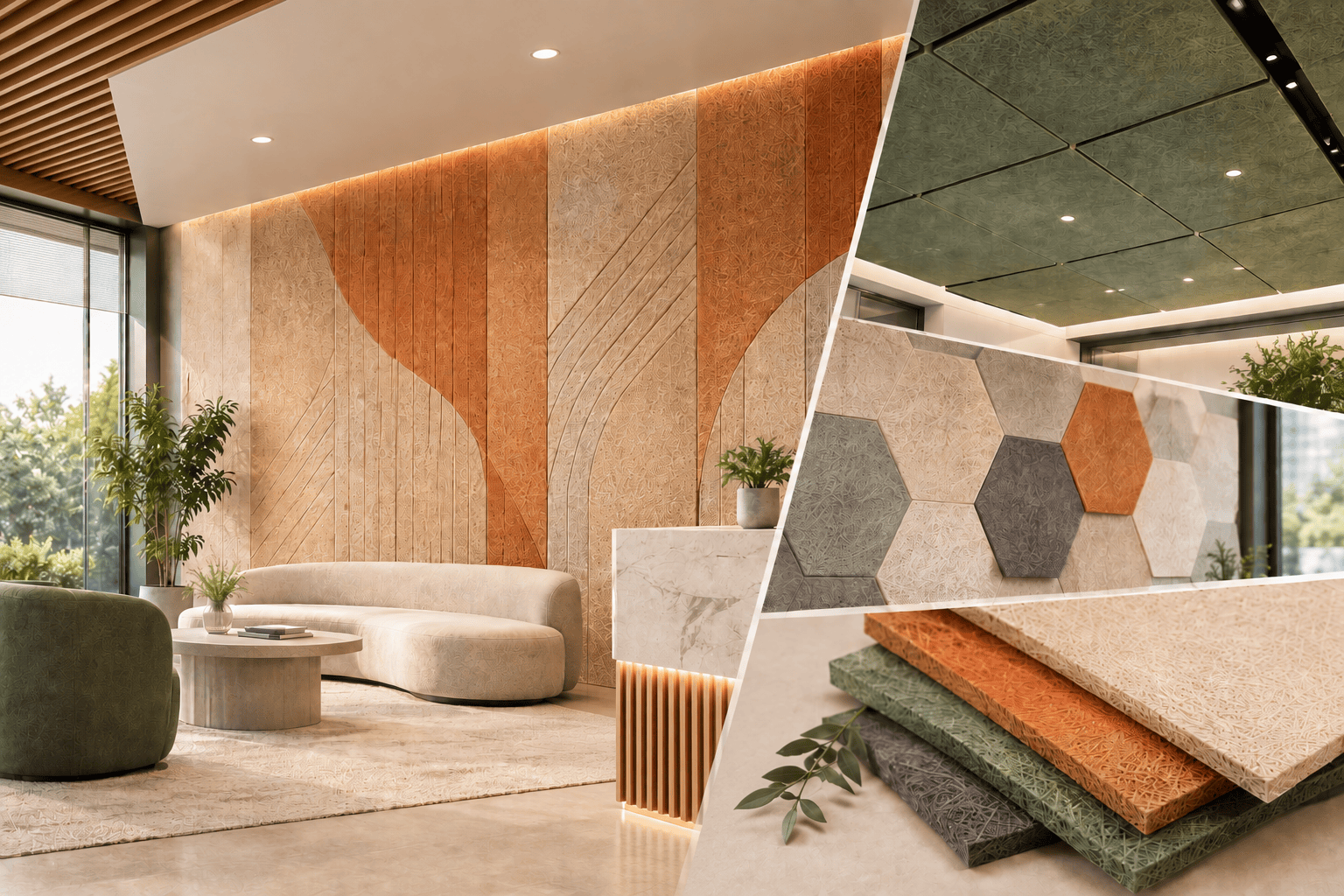
Commercial and hospitality spaces are increasingly integrating acoustic panels into their interiors to manage reverberation, improve acoustic comfort and complement modern design. Advances in acoustic panel material have made it possible to combine sound absorption with aesthetic flexibility, while acoustic sheet material offers designers versatile options for walls, ceilings, partitions and customised applications. As businesses place greater emphasis on user experience, wellness and high-performing interiors, acoustic design is becoming an integral part of commercial architecture.
Explore the Changing Role of Acoustics
Walk into a contemporary office, hotel, restaurant or café and you will often find an interesting combination of design elements like glass, concrete, metal, wood, stone and other hard surfaces. These materials create the clean, sophisticated appearance that defines many modern interiors, but they can also influence how sound behaves within a space.
When sound encounters multiple hard surfaces, it can reflect and continue travelling through the room. In busy environments where conversations, calls, background music and movement happen simultaneously, these reflections can contribute to excessive reverberation and make communication less comfortable.
This is why acoustic planning is becoming increasingly important in commercial and hospitality projects. Instead of treating sound control as a technical requirement that is addressed towards the end of a project, architects and interior designers are incorporating it into the design process from the beginning.
This shift has significantly expanded the role of acoustic panels. They are no longer viewed only as functional products for specialist environments. They are increasingly being selected as architectural materials that can contribute to both the acoustic and visual character of a space.
Why Commercial Spaces are Paying More Attention to Sound
The workplace has changed considerably over the last decade. Open-plan layouts, collaborative zones, hybrid working, meeting areas and flexible workstations have become common features of commercial interiors. While these layouts encourage interaction and efficient use of space, they can also create a more complex acoustic environment.
A conversation taking place at one workstation can become a distraction for another employee. Multiple virtual meetings can overlap within an open floor plate, while background conversations and general movement add to the overall sound level.
The objective of acoustic treatment is not necessarily to create complete silence. A well-designed workplace should still feel active and collaborative. The objective is to manage sound reflections and reverberation so that different activities can coexist more comfortably.
This is where carefully specified acoustic panel material can become an important part of workplace design. Wall-mounted panels, ceiling treatments, screens and other acoustic elements can be positioned according to the requirements of different zones.
For example, a meeting room may require focused acoustic treatment, while an open collaboration area may benefit from a combination of ceiling and wall solutions. A workstation zone may incorporate acoustic screens that provide both visual separation and sound absorption.
The result is a workplace that is designed around different modes of activity rather than relying on a single acoustic strategy throughout the entire floor.
Hospitality Spaces have an Experience to Protect
The importance of acoustics becomes particularly noticeable in hospitality.
Hotels, restaurants, cafés, lounges and event spaces are designed around human interaction. Conversations, music and ambient activity are part of their atmosphere. However, when sound reflections become excessive, the same atmosphere can become uncomfortable.
Restaurants are a good example. A dining area may include hard flooring, glass windows, exposed ceilings and other reflective surfaces. Add conversations from several tables, kitchen activity and background music, and the space can quickly develop a challenging acoustic environment.
Hotels face similar requirements in lobbies, restaurants, lounges and conference facilities. These areas need to accommodate different activities while maintaining a sense of comfort and sophistication.
This is one reason acoustic panels are increasingly being incorporated into hospitality interiors. Instead of hiding acoustic treatment, designers can use it as part of the overall visual composition.
A wall treatment can become a feature wall. A suspended acoustic system can contribute to the ceiling design. A partition can divide a space while providing sound absorption. With the right acoustic panel material, these functional requirements can be incorporated without disrupting the design concept.
Acoustic Treatment is Becoming Part of the Architecture
One of the most important changes in acoustic design is the move from concealed treatment to visible integration.
Traditional acoustic solutions were often expected to remain unnoticed. Contemporary interior design takes a different approach. Designers increasingly want materials that contribute to the appearance of the space while performing their intended technical function.
Modern acoustic panel material can support this approach through different finishes, colours, textures, patterns and configurations. Depending on the product, panels can be arranged in linear patterns, geometric compositions or customised layouts.
This creates greater freedom for designers.
A large office wall does not necessarily need to remain a plain surface simply because acoustic treatment is required. It can become a textured feature. A ceiling does not have to rely only on conventional suspended systems; acoustic clouds or baffles can introduce visual depth while addressing acoustic requirements.
Similarly, partitions can become design elements instead of merely being functional dividers.
This integration of performance and aesthetics is one of the strongest reasons behind the growing adoption of acoustic products in commercial interiors.
The Versatility of Acoustic Sheet Material
Another factor influencing this movement is the availability of versatile acoustic sheet material.
Sheet-format acoustic materials can offer designers greater flexibility for applications where standard panel dimensions may not be sufficient. Depending on the product and its technical properties, sheet materials can be cut, shaped or configured to suit different design requirements.
This can be particularly useful for projects where acoustic treatment needs to follow a specific architectural pattern.
For instance, designers may explore custom wall compositions, decorative screens, layered surfaces or other specialised applications. This ability to work with the material as a design component gives architects and interior designers more creative freedom.
The value of acoustic sheet material therefore extends beyond its acoustic function. Its adaptability can help bridge the gap between technical requirements and creative design intent.
From Plain Surfaces to Designed Acoustic Elements
The visual evolution of acoustic products has played an important role in their adoption.
Earlier generations of acoustic treatments were often selected primarily for their technical performance. Today, visual integration is equally important for many commercial and hospitality projects.
Designers can incorporate acoustic solutions into spaces through:
- Decorative wall treatments
- Grooved or patterned surfaces
- Acoustic screens and partitions
- Suspended ceiling elements
- Acoustic clouds
- Baffles
- Custom-cut installations
- Feature surfaces
This approach allows the acoustic layer to work alongside furniture, lighting, flooring and other interior finishes.
For brands operating in hospitality or commercial environments, this also creates opportunities to use acoustic installations as part of their visual identity. Colours, patterns and customised configurations can be coordinated with the broader design language of a project.
The result is a more cohesive interior where acoustic treatment does not appear to have been added as an afterthought.
Sustainability is also Influencing Material Choices
Material selection in commercial interiors is increasingly being influenced by sustainability objectives. Clients and design teams are paying closer attention to material composition, durability, environmental credentials and lifecycle considerations.
This has increased interest in acoustic products manufactured using recycled or recyclable materials, depending on the product and its specific construction.
For designers, this means acoustic performance can be considered alongside broader material-selection goals. However, sustainability should always be evaluated through verified product information, technical documentation and applicable certifications rather than assumptions based solely on material descriptions.
The wider trend is clear: commercial projects increasingly seek materials that can satisfy several requirements simultaneously.
A material that contributes to acoustic comfort while also supporting aesthetic and sustainability objectives can therefore become particularly valuable during the specification process.
Better Acoustic Planning Starts with the Space
Selecting acoustic panels should not simply be a matter of choosing a visually appealing product. The acoustic characteristics of the room and the actual problem being addressed need to be understood first.
A large open office with high occupancy will have different requirements from a small meeting room. A restaurant with extensive glass surfaces will present different challenges from a hotel lounge with upholstered furniture and carpeting.
Several factors should therefore be considered during acoustic planning.
Room characteristics
Room dimensions, ceiling height, floor area and existing finishes can influence how sound travels and reflects.
Sound sources
The number and type of sound sources should be understood, whether they include conversations, equipment, music, traffic or other activities.
Surface composition
Glass, stone, concrete and other hard finishes can create reflective environments, making the strategic placement of absorptive surfaces more important.
Product performance
Technical specifications and relevant acoustic test data should be reviewed when selecting an acoustic panel material.
Coverage and positioning
Simply installing acoustic products does not automatically guarantee the desired result. The quantity, location and configuration of acoustic treatment should be considered as part of the overall room strategy.
Visual requirements
The acoustic solution should complement the architectural language and material palette of the project.
This approach helps ensure that acoustic treatment is purposeful rather than simply decorative.
Acoustic Panels Are Supporting Flexible Workplace Design
Workplaces are also becoming more adaptable. A single floor can accommodate individual workstations, collaborative areas, informal meetings, video conferences and larger team gatherings.
This means the acoustic environment needs to support multiple activities.
Acoustic screens can provide separation without creating permanent walls. Ceiling-mounted solutions can address sound reflections across open areas. Wall-mounted acoustic panels can introduce sound absorption where large reflective surfaces are present.
Together, these solutions can contribute to acoustic zoning.
Rather than trying to create the same acoustic environment throughout an entire workplace, designers can create different levels of acoustic control for different activities.
This approach aligns well with the growing demand for flexible commercial interiors where spaces can change according to business requirements.
The Difference Between Soundproofing and Acoustic Treatment
A common misconception is that all acoustic products are designed to completely block sound.
In reality, acoustic treatment and sound isolation address different requirements.
Acoustic treatment generally focuses on controlling sound within a room by absorbing reflections and reducing reverberation.
Sound isolation, on the other hand, focuses on limiting the transmission of sound from one space to another and may involve construction assemblies, barriers, seals and specialised materials.
This distinction is important when selecting acoustic panels or acoustic sheet material.
If the primary challenge is excessive reverberation within a room, sound-absorbing acoustic treatment may be appropriate. If the issue involves sound passing between adjacent rooms, a different strategy may be necessary.
Understanding the difference allows designers and project teams to select materials based on the actual acoustic requirement rather than using one product for every problem.
Why This Shift Matters for Future Commercial Interiors
The growing adoption of acoustic solutions reflects a broader transformation in the way commercial and hospitality spaces are designed.
Modern interiors are expected to deliver more than visual appeal. They need to support productivity, communication, comfort, flexibility and overall user experience.
Acoustics contribute to all of these considerations.
A thoughtfully designed office can support focused work and collaboration. A restaurant can maintain its energy without allowing excessive reverberation to dominate the dining experience. A hotel can create a welcoming environment where guests can communicate comfortably.
This is why acoustic panel material is moving closer to the centre of the interior design conversation.
The material is no longer simply something that is specified after the walls, ceilings and furniture have been finalized. It is increasingly being considered alongside those elements as part of the overall spatial strategy.
The Future is Acoustic Design With Purpose
Commercial and hospitality interiors are becoming more sophisticated, and acoustic design is evolving with them.
The growing use of acoustic panels demonstrates how performance-oriented materials can become part of the visual and functional identity of a space. Meanwhile, the flexibility of acoustic sheet material is giving designers additional opportunities to develop customised solutions that align with architectural concepts.
For project owners, architects and interior designers, this creates a valuable opportunity: acoustic performance does not have to compete with aesthetics.
With thoughtful planning and appropriate material selection, the two can work together.
At Tranquil Global, we believe acoustic solutions should complement the way modern spaces are designed, used and experienced. Our approach focuses on bringing together acoustic performance, design flexibility and practical application to support the evolving needs of commercial and hospitality environments.
Whether the requirement is for a contemporary workplace, a hospitality destination, a collaborative office, a restaurant or another commercial setting, the right acoustic strategy can help create a space that performs as well as it looks.
Create Better-Sounding Spaces With Tranquil Global
Planning an upcoming commercial or hospitality project?
Explore acoustic panels, acoustic panel material and acoustic sheet material solutions with Tranquil Global and discover ways to integrate acoustic comfort into your design from the very beginning.
Connect with Tranquil Global to discuss your project requirements, explore suitable acoustic solutions and request product information or samples.
Related Read
How Wood Wool Acoustic Panels Control Chaos? Have a Look Inside the Specs.
Wondering how Wood Wool Acoustic Panels bring acoustic chaos under control? Take a closer look at their specifications, sound absorption capabilities, and design features to understand how they enhance comfort and acoustic performance.
Frequently Asked Questions
- What are acoustic panels used for?
They help absorb sound reflections and control reverberation within a room.
- Where are acoustic panels commonly used?
They are commonly used in offices, hotels, restaurants, meeting rooms, lounges and other commercial spaces.
- What is acoustic sheet material?
It is acoustic material supplied in sheet or board formats that can be used for different wall, ceiling, partition and customised applications.
- Do acoustic panels block sound?
Not necessarily. Most acoustic panels primarily absorb sound within a space, while sound isolation requires a different approach and construction strategy.