
Quick Summary
Modern commercial spaces are designed to look impressive, but visual appeal alone cannot create a comfortable environment. Wood wool acoustic panel systems help control unwanted sound, reduce reverberation, and make conversations clearer without compromising design. From offices and educational spaces to hospitality interiors and public buildings, these panels combine acoustic performance with natural material aesthetics. A wood wool ceiling can further improve sound absorption by treating the often-overlooked fifth surface of a room. This guide explores the specifications, performance factors, applications, and design advantages that make wood wool acoustic solutions a smart choice for contemporary interiors.
When Beautiful Spaces Start Sounding Chaotic
Picture a workplace with exposed services, hard flooring, glass partitions, large windows, metal elements, and minimalist furniture. Visually, it may look flawless. But once conversations, footsteps, phone calls, equipment noise, and background activity begin competing with one another, the experience changes completely.
This is where wood wool acoustic panel solutions enter the picture.
The challenge in contemporary architecture is no longer simply to create spaces that look good. Designers increasingly need to create environments that sound good, feel comfortable, support concentration, and perform acoustically.
In a room filled with hard surfaces, sound energy can bounce repeatedly from walls, ceilings, floors, and furniture. This creates reverberation and excessive background noise. Speech becomes less intelligible, people speak louder, and the overall environment can feel tiring.
A strategically designed wood wool acoustic panel helps interrupt this cycle by absorbing a portion of the sound energy before it can continue bouncing around the room.
But what exactly happens inside the material?
And which specifications determine whether a panel is actually capable of controlling acoustic chaos?
Let’s look inside the specs.
What Is a Wood Wool Acoustic Panel?
A wood wool acoustic panel is an acoustic treatment product manufactured using wood fibres bonded together with a mineral-based binder to create a lightweight, rigid, and porous panel.
Unlike conventional decorative wall treatments that primarily focus on appearance, wood wool acoustic products are engineered to contribute to sound absorption and reverberation control.
The distinctive fibrous texture is not simply a design feature. The open structure helps interact with sound waves, allowing acoustic energy to enter the material rather than being reflected entirely back into the room.
This makes wood wool an interesting material for architects and interior designers looking for a balance between:
- Acoustic performance
- Natural aesthetics
- Material durability
- Design flexibility
- Sustainability considerations
- Ceiling and wall integration
- Customisation possibilities
A well-specified wood wool acoustic panel therefore becomes more than a finishing material. It becomes part of the room’s acoustic strategy.
The Theory Behind the Silence: How Wood Wool Controls Sound?
Sound control is not about making a room completely silent. In most commercial environments, the objective is to create an acoustically balanced space.
When sound travels through an occupied room, some energy is absorbed by furniture, carpets, people, curtains, acoustic products, and other porous surfaces. Hard surfaces, meanwhile, tend to reflect sound.
A wood wool acoustic panel contributes by providing a surface capable of absorbing sound energy across relevant frequencies.
The basic sequence is simple:
Sound enters → sound interacts with the fibrous structure → acoustic energy is dissipated → fewer reflections remain in the room.
This can help reduce:
- Excessive reverberation
- Echo-like reflections
- Background noise build-up
- Speech interference
- Acoustic distractions
- Perceived loudness
The result is not merely a quieter room. It is a room where communication becomes easier and occupants can interact more comfortably.
Inside the Specs: What Should You Actually Look For?
Not all acoustic panels should be evaluated simply by their appearance. When selecting a wood wool acoustic panel, technical specifications deserve the same attention as colour, texture, and dimensions.
Here are the key parameters to examine.
1. Acoustic Absorption Performance
The most important consideration is how effectively the product absorbs sound.
Look for tested acoustic performance rather than relying solely on claims such as “noise reducing” or “soundproof.”
Depending on the application, acoustic performance may be expressed through metrics such as:
- NRC (Noise Reduction Coefficient)
- Sound absorption coefficient
- Weighted sound absorption coefficient (αw)
- Frequency-specific absorption values
These measurements help architects and consultants understand how a material behaves acoustically.
For larger spaces, reviewing frequency-dependent performance is particularly important because human speech, mechanical equipment, and other common sources of noise occupy different frequency ranges.
2. Panel Thickness
Thickness has a direct relationship with acoustic performance.
Generally, a thicker wood wool acoustic panel provides greater material depth for interacting with sound energy. However, thickness should be selected according to the project’s acoustic requirement rather than simply choosing the thickest available option.
The right specification depends on:
- Room volume
- Reverberation requirements
- Existing finishes
- Installation method
- Air gap behind the panel
- Target frequency range
This is why acoustic design should be considered at the planning stage rather than treated as an afterthought.
3. Density and Material Structure
Density affects the way the material responds to sound.
Wood wool products are made from elongated wood fibres that create a characteristic open structure. The combination of fibre geometry, density, binder, and panel thickness influences acoustic absorption.
The specification therefore matters because material composition is directly connected to performance.
4. Edge Details and Installation
An acoustic product’s performance is not determined by the panel alone.
Installation can significantly influence the final result.
For example, mounting a panel directly against a hard surface may produce a different acoustic response compared with a system that incorporates an air cavity.
Consider:
- Direct fixing
- Mechanical suspension
- Framed systems
- Concealed fixing
- Air gaps
- Ceiling suspension systems
- Joint detailing
In other words, a high-performance wood wool acoustic panel needs a well-designed installation strategy to deliver its intended benefits.
Why the Ceiling Matters More Than You Think
Walls often receive attention during acoustic planning, but the ceiling is one of the largest uninterrupted surfaces in many commercial interiors.
This makes the wood wool ceiling an important part of a comprehensive acoustic strategy.
Consider an office with a large open ceiling. If that surface remains acoustically reflective, sound can continue travelling across the room and contribute to reverberation.
Installing a wood wool ceiling introduces a large sound-absorbing surface at the top of the space.
A ceiling treatment can also provide an opportunity to combine acoustic performance with architectural expression.
Instead of hiding acoustic treatment, designers can make the ceiling part of the visual identity of the interior.
Wood Wool Ceiling: Where Acoustics Meets Architecture
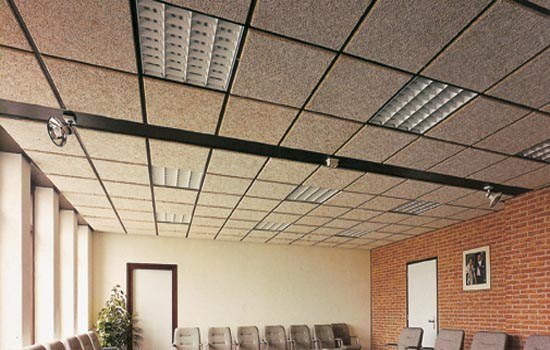
The modern wood wool ceiling is not limited to a conventional grid-based appearance.
Depending on the system and design intent, wood wool products can support different visual approaches, including:
- Suspended ceiling compositions
- Floating acoustic islands
- Continuous ceiling applications
- Linear arrangements
- Geometric patterns
- Feature ceiling zones
- Integrated acoustic and lighting concepts
This flexibility allows designers to treat acoustics as an architectural element rather than a technical correction.
Imagine a collaborative workspace where suspended wood wool panels are arranged around lighting fixtures. The result can create visual rhythm while simultaneously helping manage reverberation.
That is the real opportunity: designing acoustic performance into the architecture rather than adding it after the architecture is complete.
Why Wood Wool Works Well in Modern Commercial Interiors
Commercial interiors increasingly combine materials such as glass, concrete, metal, stone, timber, and solid surfaces.
These materials can create sophisticated visual environments, but many are acoustically reflective.
A strategically positioned wood wool acoustic panel can introduce the sound-absorbing surface that the material palette lacks.
The key advantages include:
- Acoustic comfort
Helps reduce reverberation and unwanted sound reflections. - Natural visual character
The visible wood-fibre texture creates a warm, tactile appearance. - Design versatility
Panels can become part of walls, ceilings, feature areas, and acoustic zoning strategies. - Suitable for large spaces
The system can be incorporated across substantial surface areas where acoustic treatment is required. - Architectural integration
A wood wool ceiling can coordinate with lighting, services, spatial planning, and interior design concepts. - Material-conscious design
Wood fibre-based products can support projects where designers are seeking natural or renewable material characteristics, subject to the specific product composition and certifications.
The Acoustic Performance Depends on the Whole Room
One common mistake is to assume that installing an acoustic panel automatically solves every noise problem.
Acoustic performance is influenced by the entire room ecosystem.
Before specifying a wood wool acoustic panel, designers should consider:
Room Geometry
Large, tall, or irregular spaces can behave differently from compact rooms.
Surface Materials
Glass, concrete, stone, metal, and other hard finishes can increase sound reflections.
Occupancy
People themselves absorb sound, so an occupied room can behave differently from an empty one.
Furniture
Workstations, seating, storage, and soft furnishings influence sound propagation.
Noise Sources
Mechanical equipment, conversations, footsteps, and external noise may require different acoustic strategies.
Panel Placement
The location and quantity of acoustic treatment matter as much as the material itself.
This is why a wood wool acoustic panel should ideally be selected as part of a broader acoustic design rather than as an isolated product.
From Offices to Education: Where Can Wood Wool Acoustic Panels Be Used?
The application possibilities are broad.
Workspaces
Open offices need clear communication while controlling the cumulative effect of multiple conversations. A combination of wall and ceiling acoustic treatment can create more comfortable work zones.
Educational Spaces
Classrooms require speech intelligibility. Students need to hear teachers clearly, while teachers need to communicate without constantly raising their voices.
Hospitality
Restaurants and cafés often combine hard architectural finishes with high occupancy. A wood wool ceiling can help manage reverberation while adding warmth to the interior.
Healthcare
Acoustic comfort can contribute to a calmer environment. Waiting areas, corridors, and common spaces can benefit from carefully considered sound absorption.
Retail
Retail environments often have music, announcements, conversations, and movement occurring simultaneously. Acoustic treatment can help prevent excessive sound build-up.
Public and Institutional Buildings
Large lobbies, reception areas, multipurpose halls, and circulation spaces can all create acoustic challenges due to their scale and reflective surfaces.
Don’t Just Specify a Panel. Specify the Experience.
The strongest acoustic design approach begins with a question:
What should people experience when they enter the space?
If the answer is “focused, comfortable, calm, and easy to communicate in,” then acoustic specifications should be considered alongside lighting, ventilation, ergonomics, materials, and aesthetics.
A wood wool acoustic panel can contribute to that experience by helping transform uncontrolled reflections into a more balanced acoustic environment.
Likewise, a wood wool ceiling can turn an otherwise reflective overhead plane into an active component of the room’s acoustic design.
The objective is not silence.
The objective is clarity.
How to Specify the Right Wood Wool Acoustic Solution
Before finalising a product, architects, consultants, contractors, and project teams should evaluate:
- Required acoustic absorption
- Panel thickness
- Density
- Dimensions
- Mounting method
- Air cavity requirements
- Fire-performance requirements
- Moisture/environmental suitability
- Colour and finish
- Ceiling or wall application
- Maintenance expectations
- Relevant product certifications and test reports
- Coordination with lighting and building services
Most importantly, request technical data and tested performance for the specific product being considered.
A visually attractive wood wool acoustic panel may not automatically be the right specification for every project. Product selection should always align with the project’s performance criteria.
The Bigger Design Opportunity: Make Acoustics Visible
For years, acoustic treatment was often expected to disappear into the background.
Today, designers are increasingly treating acoustic products as opportunities for architectural storytelling.
The textured character of wood wool can add depth to minimalist interiors. A patterned ceiling can become a focal point. Floating acoustic elements can define collaborative areas. Wall installations can introduce rhythm without relying exclusively on artwork or decorative cladding.
This changes the conversation around acoustic design.
Instead of asking: “How do we hide the acoustic treatment?”
Architects can ask: “How can the acoustic treatment become part of the design?”
That shift is where the wood wool acoustic panel becomes particularly interesting.
Why Tranquil Global Looks Beyond Surface-Level Design
At Tranquil Global, we believe building materials should contribute to how a space looks, performs, and feels.
Acoustic solutions are no longer simply technical components. They are part of the larger conversation around workplace wellness, communication, productivity, occupant comfort, and architectural expression.
A well-planned wood wool acoustic panel solution can help designers address acoustic challenges while maintaining a distinctive material language.
From wall applications to a carefully integrated wood wool ceiling, the goal is to create interiors where acoustic performance and aesthetics work together rather than compete.
Because when a space sounds better, people experience it differently.
Related Read
Why Acoustic Wood Wall Panels are Architects’ Go-To Choice
Explore how acoustic wood wall panels combine sound absorption, natural aesthetics, design flexibility, and architectural appeal to create more comfortable and visually distinctive interiors.
Conclusion: Control the Chaos, Design the Calm
Modern architecture has become increasingly sophisticated, but more materials and open layouts can also mean more sound reflections.
That is why acoustic design needs to be considered as an essential part of the interior strategy.
A well-specified wood wool acoustic panel can help absorb unwanted sound energy, reduce reverberation, and improve acoustic comfort. At the same time, a wood wool ceiling can transform one of the room’s largest surfaces into an effective part of the sound-management strategy.
The real value lies in looking beyond the product.
Thickness. Density. Absorption performance. Installation. Placement. Room geometry. Material palette. Occupancy.
Every specification contributes to the final acoustic experience.
At Tranquil Global, we help transform these considerations into building-material solutions designed around the demands of modern architecture.
Ready to create spaces that don’t just look exceptional but sound exceptional too? Connect with Tranquil Global to explore acoustic solutions for your next project.
FAQs
- What is a wood wool acoustic panel?
A wood wool acoustic panel is a sound-absorbing building material made primarily from wood fibres combined with a binder. Its porous fibrous structure helps absorb sound energy and reduce reverberation in interior spaces.
- Is a wood wool ceiling effective for noise control?
Yes. A wood wool ceiling can provide a large sound-absorbing surface and help reduce reflections from overhead areas. Its effectiveness depends on factors such as panel thickness, density, installation method, air gap, and the overall acoustic design of the room.
- Where can wood wool acoustic panels be used?
They can be used across offices, educational institutions, hospitality spaces, retail environments, healthcare facilities, public buildings, meeting rooms, auditoriums, cafeterias, and other interiors where reverberation control is required.
- Does a wood wool acoustic panel soundproof a room?
Not necessarily. Acoustic absorption and soundproofing are different concepts. A wood wool acoustic panel primarily helps control sound within a room by absorbing reflections and reducing reverberation. Sound insulation between rooms requires additional construction strategies.
- How do I choose the right wood wool acoustic panel?
Consider the project’s acoustic target, room size, surface finishes, panel thickness, density, mounting method, air gap, fire requirements, environmental conditions, aesthetics, and verified acoustic test data. The right solution should be selected according to the specific requirements of the space.