
Quick Summary
Selecting the right ceiling system is about much more than appearance. The choice between metal ceiling panels and aluminium ceiling tiles can influence durability, maintenance, acoustics, fire safety, and the overall functionality of your space. This guide compares both options in detail, helping architects, designers, contractors, and facility managers make informed decisions. You’ll also learn how choosing the right metal ceiling grid and ceiling configuration can maximize performance while complementing modern interior designs.
Ceilings have evolved beyond being mere architectural elements. Today, they contribute significantly to acoustics, aesthetics, sustainability, lighting integration, and maintenance efficiency. Whether designing a corporate office, healthcare facility, educational institution, airport, retail outlet, or hospitality project, selecting the appropriate ceiling solution directly impacts the long-term performance of the space.
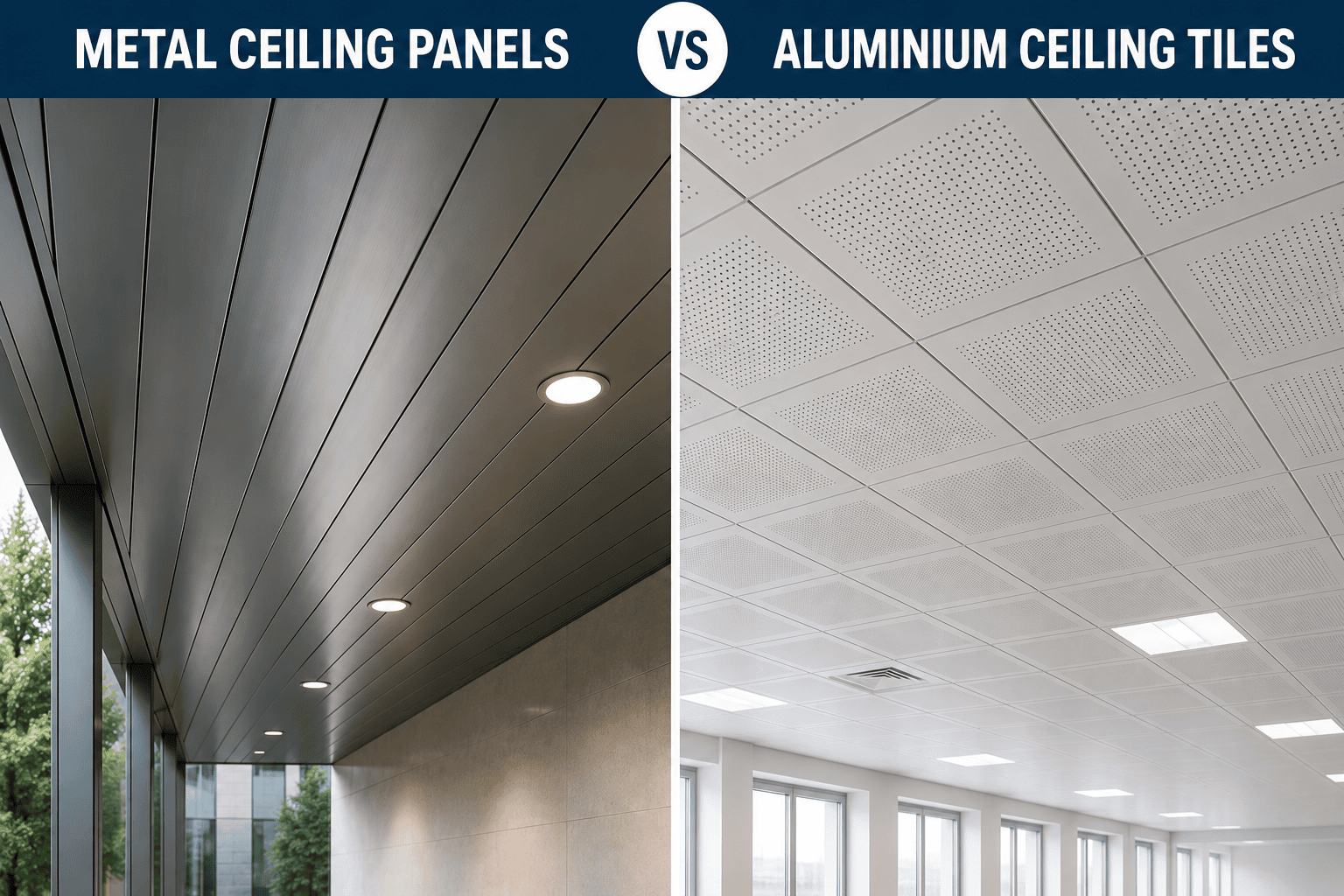
Among the most preferred suspended ceiling solutions are metal ceiling panels and aluminium ceiling tiles. While they may appear similar at first glance, they differ in material composition, strength, installation methods, applications, cost, and long-term value.
If you’re planning a new project or renovating an existing interior, understanding these differences before purchasing can help avoid costly mistakes while ensuring superior performance.
At Tranquil, we help architects and developers select premium ceiling systems that combine functionality, durability, and design flexibility for modern commercial interiors.
Understanding How Metal Ceiling Systems Work?
A complete ceiling solution consists of more than just ceiling tiles or panels. It includes supporting suspension components such as the metal ceiling grid, hangers, clips, and accessories that together create a secure and aesthetically pleasing installation.
A properly designed metal ceiling grid provides structural stability while allowing easy access to electrical, HVAC, plumbing, and fire safety systems hidden above the ceiling.
Modern ceiling systems are available in multiple finishes including powder-coated surfaces, wood-look textures, custom colours, and perforated designs suitable for acoustic applications.
What Makes Metal Ceiling Panels a Smart Investment?
Metal ceiling panels are ceiling components manufactured primarily from galvanized steel, stainless steel, or aluminium. These panels are engineered for high durability, dimensional stability, and excellent performance in demanding commercial environments.
They are available in various profiles such as:
- Clip-in panels
- Lay-in panels
- Hook-on systems
- Linear ceilings
- Baffle ceilings
- Open cell ceilings
- Custom architectural panels
Many modern metal ceiling panels also incorporate acoustic backing materials to reduce sound reflections while maintaining a sleek appearance.
Why Aluminium Ceiling Tiles Are in High Demand?
Aluminium ceiling tiles are lightweight ceiling modules manufactured specifically using aluminium sheets. Their corrosion resistance and ease of handling make them popular for projects where moisture resistance and lightweight construction are priorities.
These ceiling tiles are commonly used in:
- Corporate offices
- Hospitals
- Laboratories
- Clean rooms
- Airports
- Shopping malls
- Educational institutions
Because aluminium naturally resists corrosion, aluminium ceiling tiles perform exceptionally well in humid environments where long-term durability is essential.
Metal Ceiling Panels vs Aluminium Ceiling Tiles Which One Wins?
Material Strength
When comparing strength, metal ceiling panels manufactured using galvanized steel generally provide higher structural rigidity than aluminium ceiling tiles.
Steel-based panels perform better in high-traffic commercial environments where durability and impact resistance are critical.
Meanwhile, aluminium ceiling tiles offer excellent strength-to-weight ratio while remaining significantly lighter.
Weight
Weight becomes an important consideration during installation.
Because aluminium ceiling tiles are lightweight, they reduce structural load and simplify installation.
Lighter ceiling systems also improve handling during maintenance and replacement.
Corrosion Resistance
One of the biggest advantages of aluminium ceiling tiles is their exceptional corrosion resistance.
Unlike conventional metals, aluminium naturally forms a protective oxide layer that prevents rust formation.
Although galvanized metal ceiling panels also resist corrosion effectively, aluminium often performs better in coastal regions, humid climates, and healthcare environments.
Design Flexibility
Today’s architects demand flexibility.
Both metal ceiling panels and aluminium ceiling tiles are available in:
- Square designs
- Rectangular formats
- Linear profiles
- Curved ceilings
- Decorative finishes
- Wood grain textures
- Custom colours
Premium manufacturers such as Tranquil also offer customized ceiling systems designed around project-specific architectural requirements.
How Perforated Metal Ceiling Tiles are Transforming Modern Interiors
Modern commercial buildings increasingly prioritize occupant comfort, making acoustics a critical design consideration.
This is where perforated metal ceiling tiles stand out.
Unlike solid ceiling systems, perforated metal ceiling tiles feature precision-engineered perforations that allow sound waves to pass through the surface and get absorbed by acoustic backing materials.
Benefits include:
- Improved speech clarity
- Lower reverberation
- Reduced echo
- Better workplace productivity
- Enhanced learning environments
- Comfortable healthcare spaces
Today’s perforated metal ceiling tiles combine premium aesthetics with excellent acoustic performance, making them one of the fastest-growing ceiling solutions worldwide.
The Backbone of Every Ceiling Installation: Metal Ceiling Grid
Even the highest-quality ceiling panels cannot perform effectively without a reliable metal ceiling grid.
The metal ceiling grid supports the complete suspended ceiling system while ensuring alignment, stability, and accessibility.
A premium metal ceiling grid offers:
- Superior load-bearing capacity
- Faster installation
- Better panel alignment
- Easy maintenance access
- Long service life
- Compatibility with lighting and HVAC systems
Investing in a high-quality metal ceiling grid minimizes future maintenance costs and enhances ceiling longevity.
Finding the Perfect Ceiling for Your Project
The answer depends entirely on your project requirements.
Choose metal ceiling panels if your priorities include:
- Higher structural strength
- Heavy-duty commercial usage
- Long-term durability
- High traffic environments
- Premium architectural finishes
Choose aluminium ceiling tiles if your project requires:
- Lightweight construction
- Superior corrosion resistance
- Easy installation
- Moisture-prone environments
- Low maintenance
For projects where acoustics are equally important, perforated metal ceiling tiles offer the ideal balance between aesthetics and sound performance.
Your Complete Ceiling Buying Checklist is here…
Before selecting your ceiling system, consider the following:
Project Type
Corporate offices, airports, hospitals, educational institutions, retail outlets, and hospitality projects all have different ceiling requirements.
Acoustic Performance
If noise control matters, select perforated metal ceiling tiles with acoustic infill for better sound absorption.
Fire Safety
Ensure your selected metal ceiling panels comply with applicable fire safety standards.
Maintenance
Both aluminium ceiling tiles and metal ceiling panels require relatively low maintenance, but accessibility for servicing utilities should always be considered.
Ceiling Suspension
Choose a high-quality metal ceiling grid compatible with your selected ceiling system.
Sustainability
Many premium ceiling systems are manufactured using recyclable materials and contribute toward green building certifications.
Why Industry Professionals Trust Tranquil
When investing in commercial ceiling systems, experience matters.
Here’s why professionals trust Tranquil:
- Premium-quality ceiling systems built for long-term performance.
- Comprehensive product portfolio for commercial interiors.
- Customized solutions tailored to architectural requirements.
- Focus on acoustic excellence, sustainability, and innovation.
- Dedicated technical support from specification to installation.
Our commitment extends beyond supplying products, we help create interiors that perform efficiently while enhancing user experience.
Related Blog You May Like
Explore Now: Acoustic Ceiling Panels vs. Metal False Ceiling: Which Lasts Longer?
Conclusion
Choosing between metal ceiling panels and aluminium ceiling tiles is about selecting the solution that best matches your project’s structural, aesthetic, acoustic, and maintenance requirements.
If durability and structural strength are your priorities, metal ceiling panels provide an excellent solution. If lightweight construction and corrosion resistance are more important, aluminium ceiling tiles become the preferred option. And for projects demanding superior acoustic performance, perforated metal ceiling tiles, supported by a high-quality metal ceiling grid, deliver exceptional results.
With the right expertise and product selection, your ceiling becomes an integral part of your building’s long-term performance.
Looking for premium ceiling solutions? Connect with Tranquil today to explore our complete range of ceiling systems and discover the ideal solution for your next commercial project.
Frequently Asked Questions
1. What is the difference between metal ceiling panels and aluminium ceiling tiles?
Metal ceiling panels can be manufactured using steel or aluminium and generally offer greater structural flexibility, while aluminium ceiling tiles are specifically made from aluminium and are valued for their lightweight and corrosion-resistant properties.
2. Why is a metal ceiling grid important?
A high-quality metal ceiling grid supports the suspended ceiling system, ensures structural stability, simplifies maintenance access, and enhances the overall longevity of the installation.
3. Which ceiling option requires less maintenance?
Both metal ceiling panels and aluminium ceiling tiles require minimal maintenance. However, aluminium performs particularly well in humid environments due to its natural corrosion resistance.
4. Are metal ceiling systems sustainable?
Yes. Many modern metal ceiling panels, aluminium ceiling tiles, and perforated metal ceiling tiles are manufactured using recyclable materials, making them suitable for sustainable and green building projects.