
Imagine walking into a beautifully designed office. The furniture is premium, the lighting is perfect, and every corner looks thoughtfully planned. Yet, conversations echo across the room, phone calls become distractions, and meetings struggle with poor speech clarity.
This is where acoustics make the difference.
Today, architects and designers understand that great interiors are not judged only by how they look but also by how they sound. As workplaces, educational institutions, hospitality venues, and commercial environments evolve, choosing the right acoustic solution has become a critical design decision.
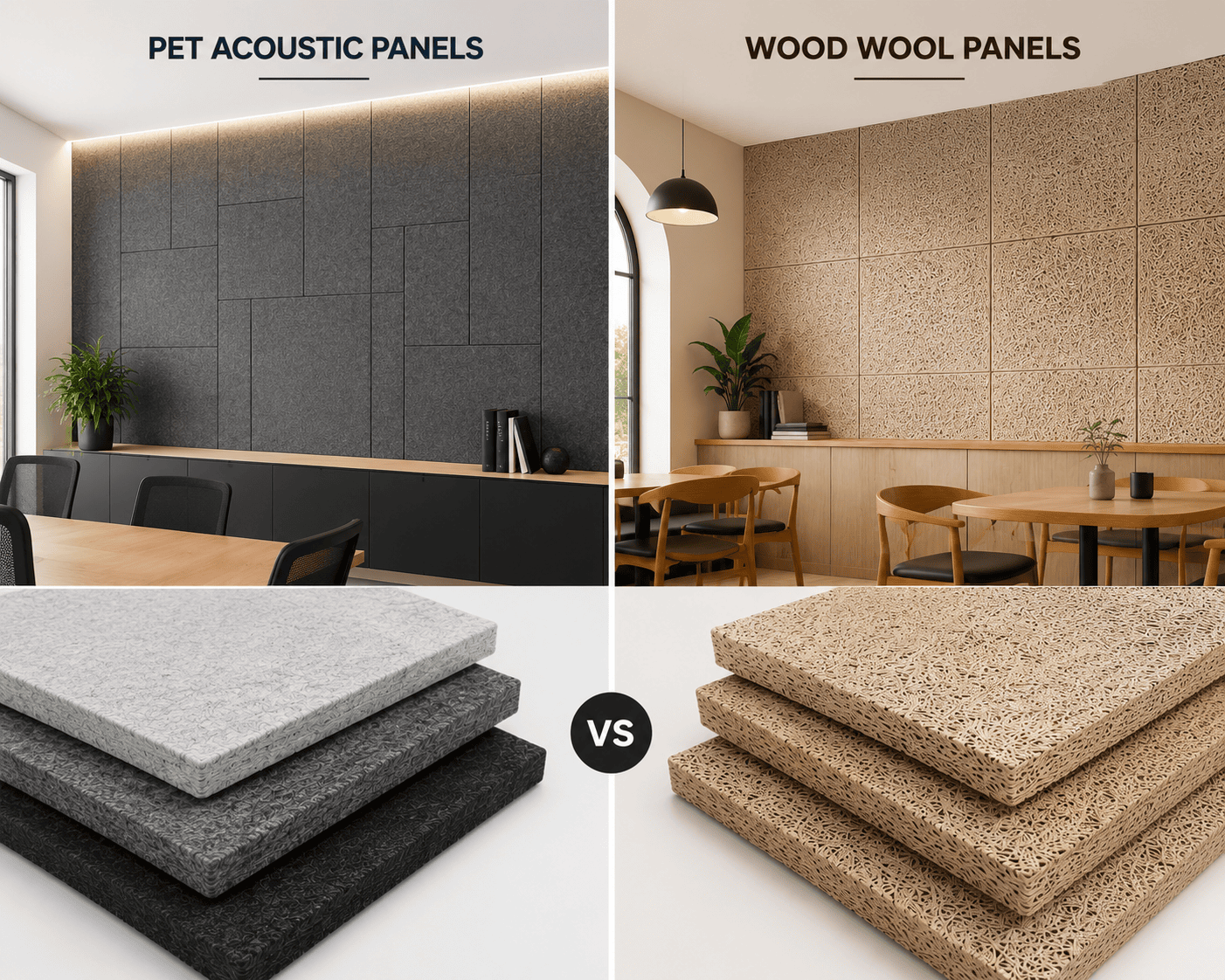
Two materials frequently appear on the specification list: PET acoustic panels and wood wool panels.
While both are designed to improve acoustic comfort, they differ significantly in composition, aesthetics, performance, installation, and ideal applications.
So, which one deserves a place in your next project?
Let’s explore.
Beyond Noise Control: Why Acoustic Materials Matter?
Modern buildings are increasingly designed with open layouts, collaborative zones, glass partitions, and minimalist aesthetics. While visually appealing, these features often create sound challenges.
Poor acoustics can lead to:
- Reduced productivity
- Lack of privacy
- Employee fatigue
- Poor concentration
- Lower customer satisfaction
- Communication difficulties
This is why selecting the right acoustic treatment is no longer an afterthought, it’s a strategic design decision.
Both pet acoustic panels and wood wool acoustic panel systems help manage sound, but they achieve it in different ways.
Meet the Modern Performer: PET Acoustic Panels
Think of PET acoustic panels as the new-generation acoustic solution designed for contemporary interiors.
Manufactured using compressed polyester fibers often sourced from recycled plastic bottles these panels combine sustainability, functionality, and aesthetics into a single product.
Unlike traditional acoustic materials, acoustic pet panels are often designed to become part of the interior design language rather than simply blending into the background.
Why Designers Love PET Acoustic Panels
✔ Lightweight construction
✔ Excellent sound absorption
✔ Sustainable material composition
✔ Endless customization possibilities
✔ Contemporary visual appeal
✔ Easy installation and maintenance
Today, pet panels acoustic systems can be found in everything from corporate offices and coworking hubs to educational campuses and hospitality spaces.
Nature Meets Acoustics: Understanding Wood Wool Panels
A wood wool acoustic panel brings a completely different personality to a space.
Manufactured from long wood fibers bonded with cementitious materials, these panels create a distinctive textured surface that instantly adds warmth and architectural character.
Instead of hiding their material composition, wood wool panels celebrate it.
Their organic appearance has made them increasingly popular in biophilic and sustainability-driven designs.
Why Architects Choose Wood Wool Panels
✔ Natural visual texture
✔ Strong architectural identity
✔ Durable construction
✔ Sustainable raw materials
✔ Effective acoustic performance
✔ Suitable for large-scale projects
A wood wool acoustic panel often becomes both a design feature and an acoustic solution.
Round One: Acoustic Performance
Which Material Handles Sound Better?
At their core, both products are designed to absorb sound energy and reduce reverberation.
However, their strengths differ depending on the environment.
PET Acoustic Panels: Precision for Speech
One reason PET acoustic panels have become a favorite in modern offices is their ability to improve speech intelligibility.
In environments where conversations, presentations, video calls, and collaboration occur daily, acoustic pet panels excel at reducing distracting echoes and improving clarity.
Ideal applications include:
- Boardrooms
- Meeting rooms
- Open-plan offices
- Training centers
- Libraries
- Coworking spaces
Wood Wool Panels: Built for Volume
A wood wool acoustic panel performs exceptionally well in larger spaces where sound travels over greater distances.
Common applications include:
- Auditoriums
- Educational institutions
- Sports facilities
- Public infrastructure
- Large halls
For projects involving expansive spaces, wood wool panels often provide the durability and acoustic coverage required.
Round Two: Sustainability Showdown
Which Option Supports Greener Buildings?
Sustainability has shifted from being a design trend to a project requirement.
Both products contribute positively, but through different approaches.
PET Acoustic Panels: Giving Waste a Second Life
One of the strongest advantages of PET acoustic panels is their recycled content.
Many acoustic pet panels are manufactured using post-consumer plastic bottles, transforming waste into high-performing architectural products.
Benefits include:
- Reduced landfill waste
- Circular economy contribution
- Lower environmental footprint
- Long product lifespan
For projects pursuing green building certifications, pet panels acoustic solutions often align well with sustainability goals.
Wood Wool Panels: Powered by Natural Resources
A wood wool acoustic panel takes a different sustainability route.
Its primary ingredient is wood, a renewable resource.
The natural composition of wood wool panels appeals to projects emphasizing material authenticity and environmentally responsible sourcing.
Round Three: The Design Flexibility Test
Which Material Gives Designers More Creative Freedom?
Acoustic products are no longer expected to hide in ceilings and corners.
Today, they are expected to contribute to the overall design story.
PET Acoustic Panels: The Design Chameleon
If creativity is a priority, PET acoustic panels offer remarkable versatility.
Design possibilities include:
- Geometric wall installations
- Custom branding elements
- Suspended ceiling clouds
- Decorative acoustic baffles
- Artistic feature walls
- Customized color schemes
This adaptability has made acoustic pet panels a preferred choice among modern interior designers.
Wood Wool Panels: Texture with Character
A wood wool acoustic panel provides something many synthetic materials cannot replicate authentic texture.
The natural fiber pattern creates visual depth and warmth, making wood wool panels ideal for:
- Biophilic interiors
- Educational environments
- Sustainable architecture
- Scandinavian-inspired designs
- Nature-focused spaces
Round Four: Installation Reality Check
What Happens After Specification?
Even the best acoustic solution must be practical to install.
PET Acoustic Panels: Fast and Flexible
Because PET acoustic panels are lightweight, they simplify installation considerably.
Advantages include:
- Reduced labor effort
- Faster project completion
- Easier handling on-site
- Flexible application methods
This makes pet panels acoustic systems particularly attractive for renovation and retrofit projects.
Wood Wool Panels: Built for Structural Strength
A wood wool acoustic panel is generally heavier and requires more robust support systems.
While installation can take longer, the resulting durability often makes the investment worthwhile for large-scale environments.
Round Five: Durability and Everyday Maintenance
Which Material Stays Looking Better for Longer?
Acoustic solutions should continue performing long after installation.
PET Acoustic Panels
PET acoustic panels offer:
- Stain resistance
- Easy cleaning
- Low maintenance
- Long-lasting appearance
For commercial interiors with regular daily use, acoustic pet panels provide practical long-term value.
Wood Wool Panels
Wood wool panels are highly durable and resistant to physical impact.
They are frequently chosen for environments where durability is just as important as acoustics.
Examples include:
- Schools
- Sports complexes
- Transportation facilities
- Public buildings
Choosing Based on Project Personality
Pick PET Acoustic Panels If Your Project Needs:
✓ Modern aesthetics
✓ Flexible customization
✓ High speech clarity
✓ Sustainable recycled materials
✓ Lightweight installation
✓ Creative design integration
For many contemporary interiors, PET acoustic panels strike an ideal balance between performance and visual appeal.
Pick Wood Wool Panels If Your Project Needs:
✓ Natural textures
✓ Architectural expression
✓ Durable large-scale installations
✓ Biophilic design elements
✓ Strong material character
✓ Long-term resilience
A wood wool acoustic panel remains a timeless choice for projects that celebrate natural materials.
The Tranquil Perspective: Acoustics Should Work With Design, Not Against It
At Tranquil, we believe acoustic products should do more than absorb sound.
They should enhance user experience, complement architectural intent, support sustainability goals, and contribute to the overall visual identity of a space.
Our experience across corporate offices, educational institutions, hospitality projects, healthcare facilities, and commercial environments allows us to recommend solutions that balance aesthetics, functionality, and long-term value.
Whether you’re considering pet acoustic panels, acoustic pet panels, pet panels acoustic solutions, or a wood wool acoustic panel, the right specification always starts with understanding the space and the people who use it.
Continue Exploring Acoustic Solutions
Recommended Reading: Why Acoustic Boards for Walls are the Secret Ingredient for Productive Workspaces
Final Verdict:
It’s Not About Better… It’s About Better for Your Space
The debate between PET acoustic panels and wood wool panels doesn’t have a universal winner.
One delivers exceptional design flexibility, modern aesthetics, and recycled sustainability. The other offers natural character, architectural texture, and proven durability.
The smartest choice is the one that aligns with your project’s acoustic goals, design vision, sustainability objectives, and user expectations.
Looking for Expert Acoustic Guidance?
Connect with Tranquil’s acoustic specialists to discover the ideal solution for your next project. Whether you’re designing a collaborative workplace, educational campus, hospitality environment, or public facility, we’ll help you create spaces that sound as impressive as they look.