
Quick Summary
Modern spaces need more than attractive interiors as they need effective sound management. Acoustic Materials For Walls, including Acoustic Board Panels and Acoustic Boards For Walls, help reduce noise, improve speech clarity, and create comfortable, private, and productive environments. Whether for offices, schools, healthcare facilities, hospitality, or homes, the right acoustic solutions enhance both aesthetics and functionality, delivering spaces that look exceptional and perform even better.
Imagine walking into two offices. The first is filled with echoing conversations, ringing phones, and constant distractions. The second feels noticeably calmer. Conversations remain private, meetings are easier to follow, and employees appear more focused. The difference isn’t always expensive furniture or luxurious interiors often comes down to acoustic materials for walls.
Modern architecture has embraced open layouts, glass partitions, and collaborative workspaces. While these design trends enhance aesthetics and encourage interaction, they often create a major challenge: unwanted noise. Excessive sound doesn’t just become an annoyance; it directly impacts concentration, employee wellbeing, customer experiences, and even business performance.
This is why architects, interior designers, facility managers, and business owners increasingly prioritize acoustic materials for walls when designing commercial, educational, healthcare, hospitality, and residential spaces. Whether it’s premium Acoustic Board Panels or high-performance acoustic boards for walls, today’s acoustic solutions combine visual appeal with measurable performance.
Let’s explore how these innovative wall solutions improve comfort, ensure privacy, and significantly enhance productivity in modern environments.
Why Noise Has Become a Modern Design Challenge
Today’s buildings are designed differently than they were a decade ago. Open offices replace cubicles. Restaurants embrace industrial interiors with concrete and glass. Educational institutions encourage collaborative learning. Hospitals prioritize welcoming environments instead of enclosed corridors.
Although visually appealing, these spaces contain numerous hard surfaces that reflect sound rather than absorb it. Conversations bounce across rooms, footsteps become louder, and equipment noise travels further than expected.
The result?
Employees struggle to concentrate. Students lose focus. Patients experience additional stress. Customers find conversations difficult. Even luxury spaces begin to feel uncomfortable despite their impressive appearance.
This growing concern has shifted attention toward acoustic materials for walls, which help control reverberation and create environments that support both functionality and wellbeing.
Understanding Acoustic Materials For Walls
Acoustic Materials For Walls are specially engineered products designed to absorb, diffuse, or reduce sound reflections inside a room. Instead of allowing sound waves to bounce endlessly across hard surfaces, these materials capture and dissipate acoustic energy.
Unlike traditional decorative wall finishes, acoustic products are performance-driven while still offering exceptional design flexibility.
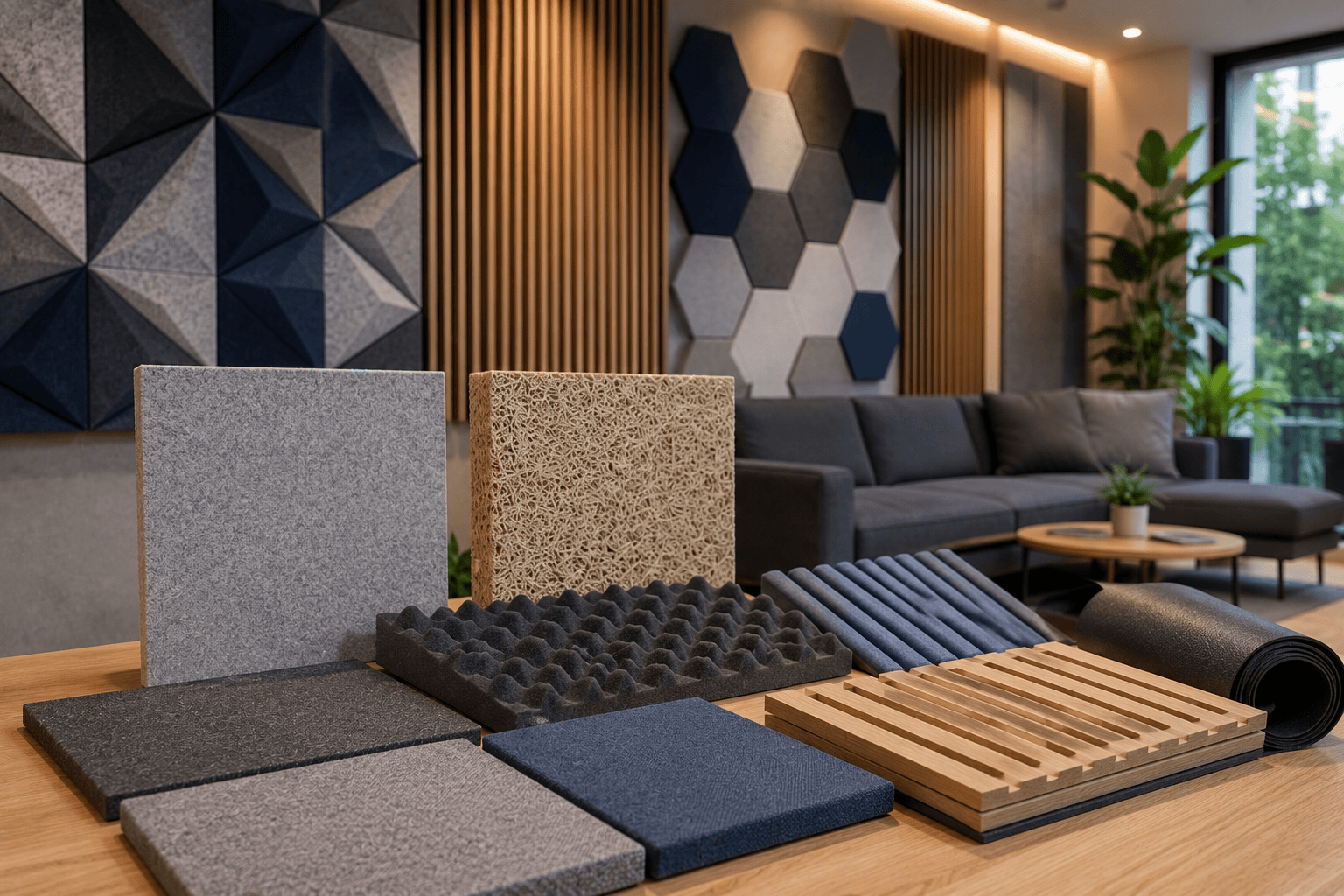
Modern acoustic materials for walls are available in numerous forms, including:
- Fabric-wrapped acoustic systems
- PET acoustic panels
- Wood acoustic panels
- Fiberglass acoustic panels
- Perforated acoustic systems
- Decorative acoustic board panels
- High-performance acoustic boards for walls
These solutions are selected based on the acoustic requirements, aesthetics, maintenance expectations, and application of the space.
Acoustic Board Panels Transform More Than Just Sound
Many people assume acoustic board panels simply reduce echoes. In reality, they transform how people experience space.
Imagine entering a conference room where every participant can hear clearly without raising their voice. Picture a classroom where students can understand every instruction without distraction. Consider a hospital waiting area that feels calmer despite being occupied.
This transformation happens because acoustic board panels minimize sound reflections, improve speech intelligibility, and reduce ambient noise.
Beyond performance, today’s acoustic board panels are available in various textures, colors, patterns, and customizable finishes, making them an architectural feature rather than a hidden technical element.
Architects increasingly integrate these panels into feature walls that combine visual branding with superior acoustic performance.
Comfort Begins With Better Acoustics
Comfort isn’t determined only by temperature or furniture. Acoustic comfort plays an equally important role in how people perceive an environment.
Continuous background noise causes fatigue even when individuals don’t consciously notice it. Over time, this constant sensory overload leads to reduced concentration, increased stress, and lower satisfaction.
Installing acoustic materials for walls significantly improves indoor comfort by reducing excessive reverberation and balancing the overall sound environment.
In workplaces, this means employees can work without constantly filtering surrounding conversations.
In homes, family members enjoy entertainment without disturbing others.
In hotels, guests experience peaceful rooms that encourage relaxation.
In educational institutions, students remain attentive for longer periods.
This ability to create calmer environments is why acoustic materials for walls have become an essential component of modern interior design.
Privacy is No Longer Optional
Privacy has become increasingly important across nearly every industry.
Corporate boardrooms discuss confidential strategies.
Healthcare facilities protect patient conversations.
Educational institutions conduct counseling sessions.
Hotels prioritize guest comfort.
Residential apartments require separation between neighboring units.
Without proper acoustic treatment, conversations easily travel across spaces, compromising confidentiality.
Strategically installed acoustic boards for walls help reduce sound transmission while minimizing reflected noise within a room. Although wall construction and insulation influence complete sound isolation, combining them with effective panel for walls significantly enhances speech privacy.
Organizations investing in acoustic materials for walls aren’t merely improving interiors as they’re building trust.
The Direct Connection Between Acoustics and Productivity
Multiple workplace studies consistently show that noise is among the leading causes of reduced productivity.
Employees interrupted by conversations require additional time to regain concentration. Frequent distractions increase errors, reduce creativity, and create workplace fatigue.
This is where acoustic materials for walls deliver measurable business value.
Instead of treating acoustics as an afterthought, organizations now view acoustic planning as an investment in employee performance.
When acoustic board panels reduce distracting reflections and acoustic boards for walls create quieter work zones, employees experience:
- Better concentration.
- Improved collaboration.
- Higher meeting efficiency.
- Reduced stress levels.
- Greater job satisfaction.
The productivity gains often outweigh the initial investment, especially in large workplaces where hundreds of employees share common spaces.
Where acoustic boards for walls Deliver Maximum Impact
One of the greatest advantages of modern acoustic boards for walls is their versatility.
- Corporate offices use them to improve collaboration zones, conference rooms, executive cabins, cafeterias, and reception areas.
- Educational institutions install acoustic boards for walls in classrooms, libraries, lecture halls, and auditoriums where speech clarity directly influences learning outcomes.
- Healthcare facilities benefit from quieter consultation rooms, patient recovery areas, waiting lounges, and diagnostic centers.
- Hospitality projects use acoustic materials for walls throughout guest rooms, banquet halls, restaurants, and business centers to create premium experiences.
- Residential projects increasingly incorporate acoustic board panels in home theaters, study rooms, living areas, and apartment interiors where noise reduction improves everyday living.
Because acoustic materials for walls can be customized for virtually any design language, they fit seamlessly into both contemporary and traditional interiors.
Design Freedom Without Compromising Performance
Years ago, acoustic treatment often meant bulky panels that disrupted interior aesthetics.
That is no longer true.
Today’s acoustic board panels combine engineering with architectural creativity.
Designers can choose from:
- Natural wood finishes
- Fabric textures
- Geometric patterns
- Linear grooves
- Custom graphics
- Corporate branding elements
- Decorative printed surfaces
This allows acoustic materials for walls to become visual focal points while delivering superior sound absorption.
For architects, this opens exciting opportunities to create interiors that are both beautiful and highly functional.
Choosing the Right Acoustic Materials For Walls
Every project has unique acoustic requirements.
A bustling office requires different sound control compared to a classroom or hospital.
When selecting acoustic materials for walls, several factors should be considered, including room dimensions, ceiling height, occupancy levels, interior finishes, furniture layout, and the type of activities taking place within the space.
Professionally designed acoustic boards for walls are often chosen based on their Noise Reduction Coefficient (NRC), durability, fire performance, sustainability credentials, maintenance requirements, and aesthetic flexibility.
High-quality acoustic board panels also provide long-term durability while maintaining consistent acoustic performance over many years.
Working with experienced acoustic specialists ensures the selected solution addresses both technical requirements and design aspirations.
Sustainability Meets Acoustic Innovation
Sustainable construction has become a global priority.
Many manufacturers now develop acoustic materials for walls using recycled PET fibers, responsibly sourced wood, recyclable aluminum systems, and environmentally conscious manufacturing processes.
These sustainable acoustic board panels contribute to healthier indoor environments while supporting green building certifications and environmentally responsible construction practices.
As businesses increasingly pursue ESG goals and sustainable building standards, environmentally friendly acoustic boards for walls offer both environmental and performance advantages.
Investing in Better Spaces Through Better Acoustics
Great interiors aren’t remembered only for how they look.
They’re remembered for how they make people feel.
- Productive office feels focused.
- Classroom feels engaging.
- Hospital feels reassuring.
- Hotel feels peaceful.
These emotional experiences are often shaped by acoustics far more than people realize.
By incorporating high-performance acoustic materials for walls, businesses create environments that improve comfort, protect privacy, enhance communication, and support higher productivity.
Whether you’re designing a new workspace, renovating an educational institution, upgrading a healthcare facility, or creating premium hospitality interiors, investing in acoustic board panels and acoustic boards for walls delivers lasting value far beyond aesthetics.
Related Reads
Continue reading with these related articles to deepen your knowledge.
Click now: PET Acoustic Panels vs. Wood Wool Panels: Which One You Should Pick?
Conclusion
Modern buildings require environments that help people think clearly, communicate effectively, and feel comfortable throughout the day. As expectations for healthier and more productive spaces continue to rise, acoustic materials for walls have become an essential design element rather than an optional upgrade.
The right combination of acoustic board panels and acoustic boards for walls transforms ordinary interiors into spaces where sound is controlled, conversations remain private, and occupants can perform at their best. From offices and schools to hospitals, hotels, and homes, acoustic solutions create experiences that people notice even if they don’t immediately realize why a space feels better.
If you’re planning your next project, don’t let acoustics become an afterthought. Choose high-performance acoustic materials for walls that balance aesthetics, sustainability, and acoustic excellence to create spaces that truly perform.
Looking to enhance your interiors with premium acoustic solutions? Connect with our experts today and discover the ideal acoustic board panels and acoustic boards for walls tailored to your project’s performance and design goals.
Frequently Asked Questions
- What are Acoustic Materials For Walls?
Acoustic materials for walls are specially engineered products that absorb or reduce sound reflections, helping create quieter, more comfortable, and acoustically balanced indoor spaces.
- Where can Acoustic Boards For Walls be installed?
Acoustic boards for walls are ideal for offices, conference rooms, educational institutions, hospitals, hotels, restaurants, auditoriums, home theaters, and residential living spaces where noise control is essential.
- How do Acoustic Board Panels improve workplace productivity?
By reducing echoes and minimizing background noise, acoustic board panels improve speech clarity, reduce distractions, and create a focused environment that supports better collaboration and productivity.
- Are Acoustic Materials For Walls available in decorative designs?
Yes. Modern acoustic materials for walls are available in a wide range of colors, textures, patterns, and customizable finishes, allowing them to enhance both acoustic performance and interior aesthetics.
- How do I choose the right Acoustic Board Panels for my project?
The ideal acoustic board panels depend on factors such as room size, occupancy, noise levels, interior design, and acoustic performance requirements. Consulting an acoustic expert helps ensure the best solution for your space.