
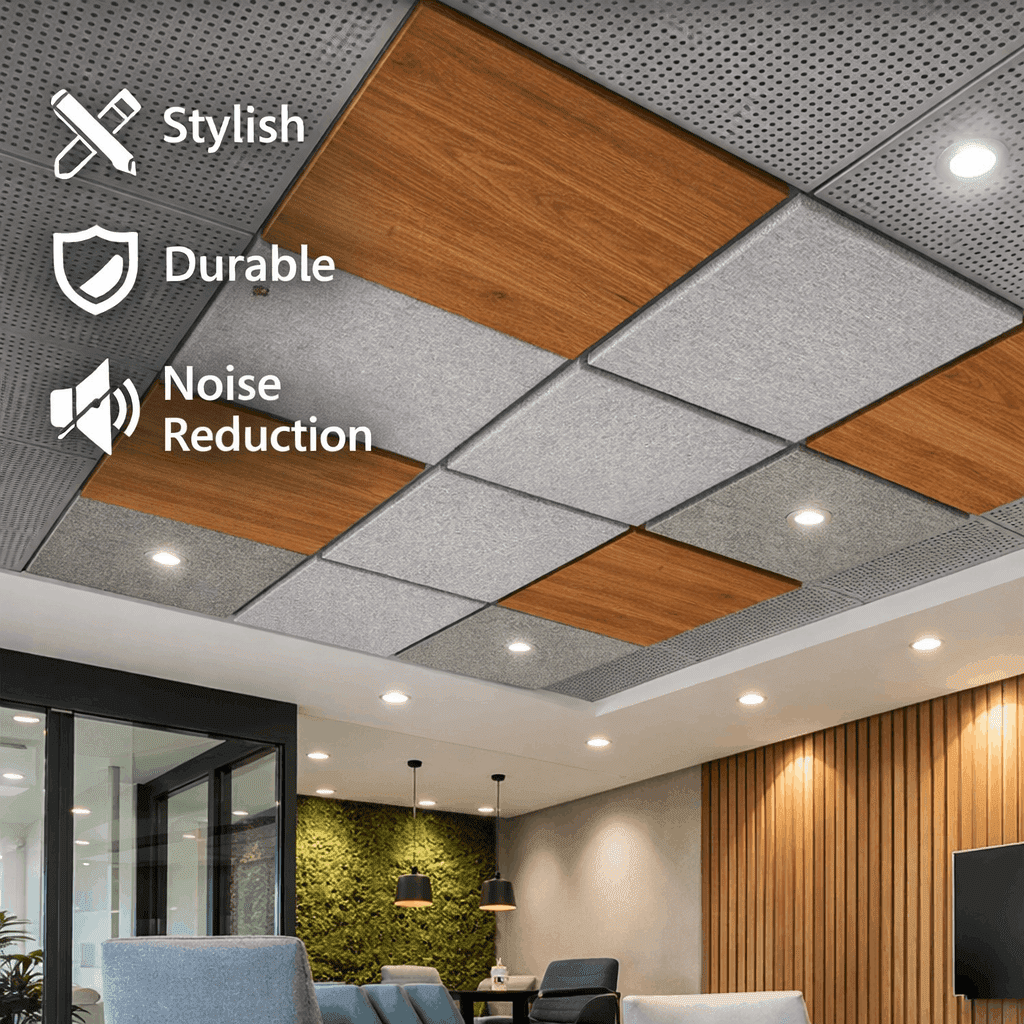
Today, in modern architecture and interior design, silence is a design feature. As workplaces become more collaborative, hospitality spaces more experiential, and homes more multifunctional, the way sound behaves within a space can define how that space feels. This is where acoustic panels for ceilings step into the spotlight.
Once seen as purely technical additions hidden above false ceilings, today’s acoustic ceiling solutions have evolved into design-forward, durable, and performance-driven elements that architects, designers, and facility managers actively seek. From enhancing speech clarity in offices to creating calming environments in hospitals and immersive experiences in retail or hospitality, acoustic ceiling tiles are now a critical component of intelligent interior design.
This blog explores how acoustic panels for ceilings successfully balance three often competing priorities: design aesthetics, long-term durability, and effective sound control and why they are becoming indispensable in contemporary spaces.
Rising Importance of Acoustic Ceiling Solutions
Sound impacts behavior more than we realize. Excessive noise leads to fatigue, reduced concentration, stress, and even lower productivity. According to global workplace and hospitality studies, poor acoustics are one of the top complaints in interior environments.
An acoustic ceiling works by absorbing sound waves, reducing reverberation time, and controlling echo. Unlike wall treatments that address sound partially, ceilings offer a larger uninterrupted surface area, making acoustic ceiling tiles and panels one of the most effective tools for noise control.
Today, acoustic panels for ceilings are not just about decibel reduction—they are about creating spaces that perform better for the people using them.
Understand, How Acoustic Panels for Ceilings Work?
At their core, acoustic panels for ceilings are designed to manage sound energy. When sound waves hit a hard surface, they reflect, causing echo and noise buildup. Acoustic ceiling materials absorb these sound waves instead of reflecting them.
Key Acoustic Principles:
- Sound Absorption (NRC): Measures how much sound is absorbed
- Reverberation Control: Reduces echo and improves clarity
- Speech Intelligibility: Critical in offices, classrooms, and conference rooms
Modern acoustic ceiling tiles are engineered using materials like fiberglass, PET, mineral fiber, wood wool, or perforated metal backed with acoustic insulation. These materials convert sound energy into heat, effectively reducing noise.
Design Evolution: From Invisible to Iconic Ceilings
Acoustic Ceilings as a Design Statement
Gone are the days when acoustic ceilings meant bland white grids. Today’s acoustic panels for ceilings come in a wide variety of:
- Colors and textures
- Custom shapes and modules
- Printed patterns and finishes
- Linear, baffle, raft, and cloud designs
Designers now use acoustic ceiling tiles as visual focal points—adding rhythm, depth, and identity to spaces. From sculptural ceiling baffles in corporate lobbies to warm fabric-wrapped panels in hospitality lounges, acoustic ceiling design has become a creative playground.
Seamless Integration with Architecture
One of the biggest advantages of modern acoustic ceiling systems is their adaptability. Whether it’s an open ceiling concept, exposed services, or complex lighting layouts, acoustic panels for ceilings can be customized to integrate seamlessly without compromising aesthetics.
This ability to blend form with function makes acoustic ceiling tiles a preferred choice for premium projects.
Durability: Built for Long-Term Performance
While design attracts attention, durability ensures value over time. High-quality acoustic ceiling systems are built to withstand years of use without losing performance or appearance.
What Makes Acoustic Ceiling Tiles Durable?
- Moisture resistance: Ideal for humid environments
- Sag resistance: Maintains shape over time
- Fire-rated performance: Complies with safety norms
- Impact resistance: Suitable for high-traffic areas
- UV stability: Prevents discoloration
Many acoustic panels for ceilings are also low-maintenance, requiring only periodic cleaning—making them ideal for commercial and institutional settings.
Sustainability & Material Innovation
Durability today also means sustainability. PET-based acoustic ceiling tiles made from recycled plastic bottles, long-life fiberglass panels, and recyclable metal ceiling systems contribute to green building certifications while offering extended lifespan.
This combination of durability and sustainability strengthens the overall value proposition of acoustic ceiling solutions.
Sound Control that Transforms User Experience
Why Ceiling Acoustics Matters?
In open-plan offices, noise travels freely. In restaurants, overlapping conversations create chaos. In classrooms, poor acoustics affect learning outcomes. An effective acoustic ceiling directly addresses these challenges.
Benefits of Acoustic Panels for Ceilings:
- Reduced background noise
- Improved speech clarity
- Enhanced concentration and comfort
- Better privacy in shared spaces
- Consistent sound quality across large areas
Unlike temporary solutions, acoustic ceiling tiles provide uniform sound absorption across the entire space, delivering predictable and measurable results.
Applications Across Diverse Spaces
Corporate & Commercial Offices
Acoustic ceiling panels help manage collaboration noise, meeting room acoustics, and overall workplace comfort—leading to higher productivity.
Hospitality & Retail
In hotels, restaurants, and retail stores, acoustic ceilings enhance guest experience by creating calm, immersive environments without sacrificing design.
Healthcare & Education
Hospitals and schools rely on acoustic ceiling tiles to reduce stress, improve communication, and support healing and learning environments.
Industrial & Institutional Spaces
Durable acoustic panels for ceilings manage noise while meeting strict safety and performance standards.
Choosing the Right Acoustic Ceiling Solution
Selecting the right acoustic ceiling involves balancing multiple factors:
- Acoustic performance (NRC ratings)
- Design intent and visual language
- Durability and maintenance needs
- Installation flexibility
- Budget and lifecycle cost
Collaborating with acoustic specialists ensures the ceiling system not only looks good but performs exactly as intended.
Unique Advantage of Ceiling-Based Acoustic Solutions
Unlike wall-mounted treatments, acoustic ceiling tiles offer:
- Larger absorption area
- Minimal intrusion into usable space
- Greater design consistency
- Better integration with lighting and HVAC
This makes acoustic panels for ceilings a smarter, more efficient solution for holistic sound control.
Future Trends in Acoustic Ceiling Design
The future of acoustic ceilings is exciting and innovation-driven:
- Custom-printed acoustic ceiling tiles
- Hybrid metal + acoustic systems
- Biophilic-inspired ceiling designs
- Smart ceilings integrated with lighting and sensors
- Sustainable, circular-material solutions
As buildings become more human-centric, acoustic ceiling design will play an even bigger role in shaping spatial experience.
Conclusion
An effective acoustic ceiling is about enhancing how a space looks, feels, and functions. Modern acoustic panels for ceilings successfully bridge the gap between aesthetics, durability, and sound control, making them an essential element in contemporary interior design.
With advanced materials, customizable designs, and proven acoustic performance, acoustic ceiling tiles deliver long-term value across commercial, institutional, and hospitality environments. They transform ceilings from passive surfaces into active contributors to comfort, productivity, and wellbeing.
Ready to Upgrade Your Ceiling Experience?
If you’re planning a new project or upgrading an existing space, now is the time to explore high-performance acoustic ceiling solutions. Partner with experts who understand both design and acoustics and create spaces that don’t just look good, but sound exceptional too.
Connect us for the best option because great design should be heard and not heard at the same time.