
Quick Summary
- Sustainable interiors are increasingly focused on materials that combine environmental responsibility with functional performance.
- PET polyester acoustic panels can help manage unwanted sound while adding colour, texture, and visual character to interior spaces.
- A polyester fibre acoustic panel can be integrated into walls, ceilings, partitions, and creative installations.
- From workplaces and educational spaces to hospitality and commercial interiors, polyester-based acoustic solutions offer versatile design possibilities.
- With thoughtful specification, acoustic performance and sustainable design can become part of the same material strategy.
What If Your Acoustic Solution Could Also Shape the Design?
A beautiful interior can lose its impact when sound is overlooked.
Imagine walking into a contemporary office with sophisticated furniture, carefully selected lighting, and an impressive ceiling design. Yet, conversations overlap, phone calls travel across the room, and every sound seems to bounce from one surface to another. The visual design may be exceptional, but the experience feels uncomfortable.
This is why acoustic comfort deserves a place in the early stages of interior design.
At the same time, today’s design industry is moving toward materials that offer more than one benefit. Architects and interior designers are looking for solutions that can support environmental goals while contributing to the aesthetics and functionality of a space.
This is where a polyester fibre acoustic panel presents an interesting design opportunity.
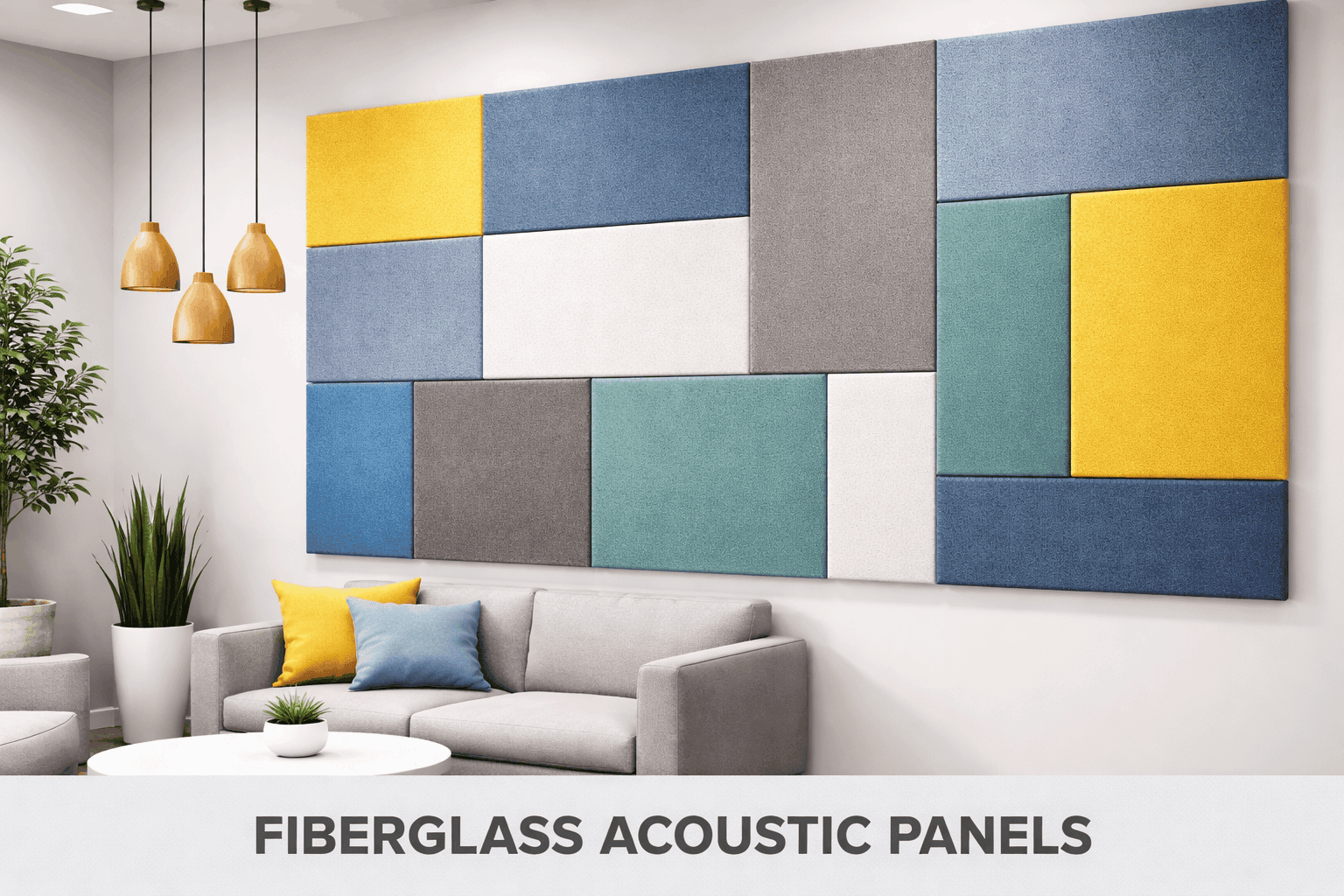
Rather than treating acoustic products as something that needs to be concealed, designers can use them as an expressive part of the interior. Available in creative formats, colours, patterns, and configurations, polyester acoustic materials can turn sound absorption into a visible design feature.
And when recycled PET content is incorporated into the product, the material can also contribute to a more responsible material palette.
The result?
A space where acoustic performance doesn’t compete with design… it becomes part of it.
From Plastic Waste to Interior Possibility
One of the most interesting aspects of polyester acoustic materials is the story behind the material.
PET, or polyethylene terephthalate, is widely used in everyday consumer products, including plastic bottles. Suitable PET material can be processed and transformed into polyester fibres, which can then be engineered into acoustic products.
This creates an opportunity to give recovered material another application within the built environment.
PET polyester acoustic panels can therefore support a circularity-oriented design conversation when they are manufactured with recycled PET content and supported by appropriate environmental credentials.
However, sustainable specification should go beyond simply looking for the word “recycled.”
Designers and project teams should also consider:
- Recycled content
- Product lifespan
- Manufacturing practices
- Product certifications
- Fire performance
- Acoustic performance
- Maintenance requirements
- Installation methods
- End-of-life considerations
The objective is not to choose a material simply because it sounds sustainable.
It is to understand how the material contributes to the project’s broader environmental and performance goals.
The New Role of Acoustic Materials in Interior Design
Acoustic treatment was once largely viewed as a technical requirement.
Today, that perception is changing.
Interior designers increasingly see acoustic elements as opportunities to introduce:
Colour. Texture. Geometry. Zoning. Branding. Movement. Identity.
A polyester acoustic board, for example, can be arranged as a simple wall treatment or transformed into a patterned feature installation.
Similarly, suspended polyester elements can create a distinctive ceiling composition while addressing acoustic requirements.
That simple change can unlock a much wider range of possibilities.
Why One Acoustic Material Can Do Much More
A major advantage of modern acoustic products is their multifunctionality.
A well-selected polyester fibre acoustic panel can contribute to several aspects of an interior simultaneously.
1. Acoustic comfort
The primary objective is sound absorption. When appropriately specified, acoustic panels can help reduce reflections and reverberation within a space.
2. Visual enhancement
Colours, textures, patterns, and forms can transform acoustic surfaces into decorative elements.
3. Space definition
Freestanding or suspended acoustic elements can help visually and acoustically define different zones.
4. Design flexibility
Panels can be incorporated into different wall, ceiling, partition, and furniture applications depending on the product system.
5. Sustainability strategy
Products containing recycled PET content can support projects pursuing more responsible material selections.
This combination makes PET polyester acoustic panels relevant to projects where multiple performance and design requirements need to coexist.
Let the Walls Speak without Making the Room Noisy
Walls have a major influence on the acoustic character of an interior.
Hard surfaces such as glass, concrete, stone, and certain finished surfaces can reflect sound. In environments with multiple people speaking simultaneously, these reflections can contribute to a lively but sometimes uncomfortable acoustic environment.
This makes walls an important opportunity for acoustic treatment.
A polyester fibre acoustic panel can be installed as a functional surface while also becoming part of the interior composition.
Think beyond rectangular panels
Instead of covering a wall uniformly, designers can explore:
- Repeated geometric modules
- Layered panels
- Alternating colours
- Abstract patterns
- Vertical compositions
- Feature-wall arrangements
- Brand-inspired graphics
- Custom shapes
This approach allows acoustic treatment to feel intentional rather than added later.
In a corporate environment, for instance, colours can reflect brand identity. In a school, playful forms can complement the learning environment. In hospitality spaces, textured acoustic surfaces can reinforce a particular design theme.
Look Up: The Ceiling Is an Acoustic Canvas
When designing acoustic environments, the ceiling is often one of the biggest opportunities.
Large open ceilings can allow sound to travel and reflect throughout a space. Instead of relying entirely on wall treatments, designers can introduce acoustic elements overhead.
A polyester acoustic board can form part of suspended systems, baffles, clouds, or other ceiling applications, depending on the product design.
The visual impact can be equally significant.
Imagine a series of suspended acoustic forms arranged above a collaborative workspace. Instead of seeing an ordinary ceiling, occupants experience a layered installation that provides both visual rhythm and acoustic functionality.
This makes the ceiling more than an overhead surface.
It becomes a design canvas for sound management.
Open Offices Need Open-Minded Acoustic Design
The modern workplace is increasingly dynamic.
Employees move between individual workstations, meeting rooms, collaboration areas, lounges, breakout spaces, and informal discussion zones.
But flexibility can create acoustic complexity.
A quiet individual task may happen a few metres away from an energetic team discussion. A video conference can take place beside an informal meeting. A phone conversation can become audible across an open workspace.
This is why acoustic design should support different activity zones rather than treating the entire office as one acoustic environment.
PET polyester acoustic panels can be incorporated into different areas to help create acoustic variation.
Possible applications include:
- Open workstations
- Collaboration zones
- Meeting rooms
- Reception areas
- Training rooms
- Cafeterias
- Breakout spaces
- Phone-call areas
- Informal discussion zones
A combination of wall panels, suspended elements, and acoustic screens can create a more layered workplace strategy.
The objective isn’t necessarily to make every area silent.
It is to make each space appropriate for the activity happening there.
Learning Spaces Where Every Word Matters
In education, acoustics directly influence the experience of communication.
Classrooms, libraries, training centres, lecture spaces, and collaborative learning environments require a balance between interaction and concentration.
A reverberant room can make speech less clear and can contribute to a distracting environment.
Here, a polyester fibre acoustic panel can serve both a functional and creative purpose.
Panels can be incorporated into classroom walls, ceilings, common areas, or learning zones. Their colours and forms can also contribute to a more engaging environment.
For younger learners, acoustic installations can become part of the visual identity of the room.
For universities and professional training spaces, more sophisticated geometric compositions can complement contemporary architectural interiors.
The material doesn’t need to look like an acoustic product.
It can simply look like good design.
Hospitality Spaces: Because Ambience Is More Than Appearance
A restaurant may have beautiful furniture and lighting, but if diners struggle to hear each other, the experience can quickly deteriorate.
The same principle applies to hotels, cafés, lounges, and reception spaces.
Acoustic comfort influences how people perceive an environment.
A carefully selected polyester acoustic board can help designers introduce sound-absorbing elements without compromising the intended visual experience.
For example:
Restaurants
Use ceiling elements or decorative wall panels to complement the dining atmosphere.
Hotels
Integrate acoustic treatments into lobbies, lounges, conference areas, and guest-facing spaces.
Cafés
Use colourful acoustic installations to create identity while helping manage sound reflections.
Retail environments
Use acoustic treatments as part of customer experience and spatial zoning.
The strongest results come when acoustics are considered alongside lighting, furniture, materials, colour, and circulation, not after other design decisions have been made.
Design Freedom Without Designing in Isolation
Sustainable materials should not restrict creativity.
In fact, the versatility of polyester acoustic solutions can help designers explore a wider range of concepts.
A polyester fibre acoustic panel can potentially be used in:
Minimalist interiors
Neutral tones and clean lines can create a seamless acoustic surface.
Biophilic-inspired interiors
Organic shapes and nature-inspired colours can reinforce a softer visual language.
Corporate interiors
Brand colours and geometric patterns can turn acoustic walls into identity elements.
Creative workplaces
Bold colours and unconventional forms can energise collaborative spaces.
Hospitality interiors
Layered textures and suspended forms can create visual warmth.
The important consideration is to select the right product, configuration, and installation method for the intended environment.
Sustainability Should Be Designed, Not Added Later
One of the biggest mistakes in sustainable design is treating sustainability as a final checklist.
By the time material selection begins, many major design decisions may already be fixed.
A better approach is to introduce sustainability at the concept stage.
When evaluating PET polyester acoustic panels, project teams can ask:
Does the material solve a genuine requirement?
Avoid specifying materials simply because they are trendy.
Does it have verified environmental credentials?
Look for reliable product information rather than relying solely on marketing claims.
Can it remain relevant for years?
Durability and timeless design can contribute significantly to responsible material selection.
Does it serve multiple purposes?
Materials that combine functionality and aesthetics can help create more integrated interiors.
Is the installation practical?
Consider the building’s existing conditions and the project’s construction requirements.
Sustainability becomes more meaningful when it is integrated into the complete decision-making process.
Acoustic Design Can Influence the Human Experience
There is another reason acoustic materials deserve more attention.
Buildings are experienced through the senses.
We see the colours.
We touch the surfaces.
We feel the temperature.
We experience the light.
And we hear the environment around us.
When unwanted noise dominates a space, it can change how that space feels.
A thoughtfully designed acoustic environment can support better communication, concentration, privacy, and comfort.
This is why a polyester fibre acoustic panel should not be viewed merely as a construction product.
It can be part of a human-centred design strategy.
The material becomes valuable not simply because it absorbs sound, but because better sound conditions can contribute to a better experience of the space.
A Practical Checklist Before You Specify
Before selecting a polyester acoustic board for a project, consider the following:
Define the acoustic challenge
Identify whether the project requires reverberation control, improved speech clarity, acoustic zoning, or another specific objective.
Study the room
Evaluate room size, ceiling height, occupancy, furniture, floor finishes, glazing, and existing surfaces.
Determine placement
Decide whether acoustic treatment is most appropriate on walls, ceilings, partitions, or as freestanding elements.
Check technical specifications
Review acoustic performance, fire-related requirements, dimensions, density, installation details, and relevant certifications.
Evaluate sustainability information
Check recycled content and available environmental documentation where sustainability is part of the project brief.
Consider the design language
Choose colours, patterns, forms, and layouts that complement the overall architectural concept.
Think long term
Select a solution that can remain functional and visually relevant throughout the expected life of the interior.
From Acoustic Product to Design Statement
The most exciting possibility of polyester acoustic solutions lies in changing the role of the material.
A panel does not have to disappear into a wall… It can become a pattern.
A ceiling element does not have to look purely functional… It can become a focal point.
A screen does not have to simply divide a workspace… It can create a visual boundary while supporting acoustic comfort.
This is the real design opportunity offered by PET polyester acoustic panels.
They allow architects and designers to think of sound management as another layer of creative expression.
Just as lighting shapes atmosphere and materials shape texture, acoustic elements can shape the soundscape and visual identity of an interior.
Why Tranquil Global Believes Acoustic Design Can Be More Sustainable
At Tranquil Global, the future of building materials lies in solutions that bring together performance, aesthetics, functionality, and responsible design thinking.
Acoustic requirements are different for every project. An office may require zoning and speech comfort. A restaurant may need better control of reverberation. A classroom may require improved communication. A hospitality environment may prioritise both acoustic comfort and visual impact.
That is why material selection should begin with understanding the project.
With solutions such as PET polyester acoustic panels, polyester acoustic board, and polyester fibre acoustic panel, designers can explore ways to integrate acoustic performance into the architecture and interiors themselves.
The result can be more than a quieter room.
It can be a more considered, comfortable, expressive, and sustainable space.
The Next Chapter of Acoustic Design Is Already Here
The future of interior materials is moving toward multifunctionality.
Products will increasingly be expected to perform technically while contributing to aesthetics, occupant experience, flexibility, and environmental goals.
Polyester acoustic solutions fit naturally into this evolving approach.
They provide designers with opportunities to:
- Manage sound.
- Introduce colour.
- Build visual identity.
- Define spaces.
- Create feature surfaces.
- Explore custom forms.
- Support sustainable material strategies.
Ultimately, sustainable design isn’t about making spaces look “green.”
It is about making better decisions about what goes into a space, why it is there, how long it will perform, and what value it creates.
A polyester fibre acoustic panel can be one part of that larger strategy where acoustics, aesthetics, sustainability, and human comfort are designed together rather than separately.
Related Read
Everything You Need to Know about Mass Loaded Vinyl Sheet Installation
Explore this useful guide to understand the installation process, applications, and key considerations associated with Mass Loaded Vinyl Sheet for effective sound control.
Conclusion
Make Sound Part of the Sustainability Conversation
Sustainable interiors need materials that do more than meet an environmental checklist.
They need materials that deliver meaningful performance while supporting the design vision.
PET polyester acoustic panels offer an opportunity to approach acoustic treatment differently. With their potential for recycled content, flexible applications, creative formats, and sound-absorbing capabilities, they can become an important element in contemporary interior design.
Whether it is an open-plan office, learning environment, restaurant, hotel, commercial space, or collaborative workplace, the right polyester acoustic board can contribute to both acoustic comfort and visual character.
And when thoughtfully specified, a polyester fibre acoustic panel can demonstrate that sustainability doesn’t have to mean sacrificing creativity.
It can mean designing smarter.
Looking to explore acoustic materials for your next project?
Connect with Tranquil Global to discuss your project requirements and discover acoustic solutions designed around performance, aesthetics, and sustainable design possibilities.
Frequently Asked Questions
- What are PET polyester acoustic panels used for?
PET polyester acoustic panels help absorb sound and reduce unwanted reverberation in offices, classrooms, hospitality spaces, and commercial interiors.
- Are polyester acoustic panels made from recycled material?
Yes, many polyester fibre acoustic panel products use recycled PET content, supporting more sustainable material choices.
- Can a polyester acoustic board be used as a design feature?
Yes, depending on the product, polyester acoustic boards can be available in various colours, shapes, patterns, and configurations.
- Where can polyester fibre acoustic panels be installed?
They can be installed on walls, ceilings, partitions, and other interior surfaces across workplaces, educational spaces, hotels, restaurants, and commercial environments.
- How should I choose the right polyester acoustic solution?
Consider the space, acoustic requirement, installation method, design, technical specifications, and sustainability credentials before selecting a polyester fibre acoustic panel.