
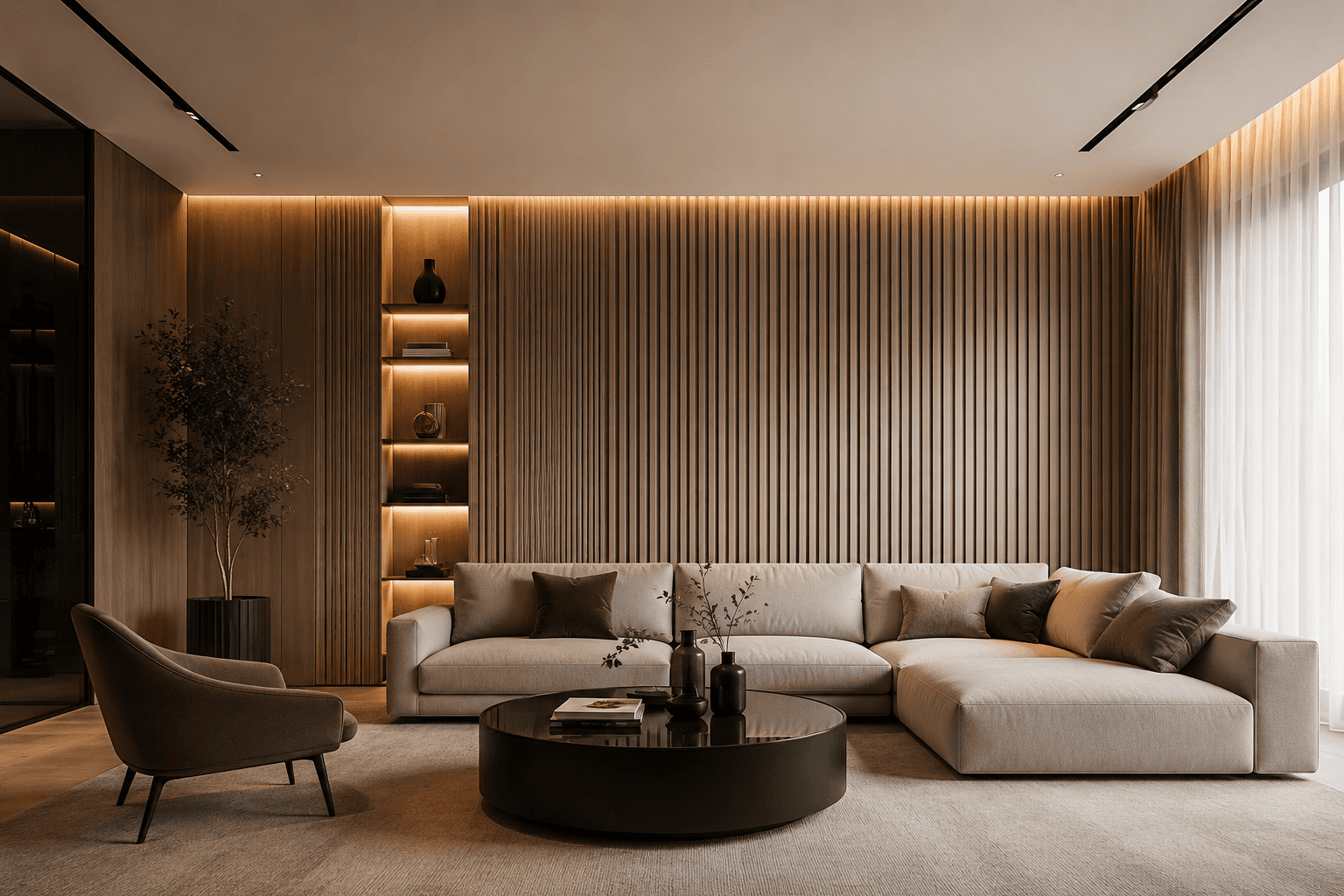
Great design is often judged by what we see but the way a space sounds can be just as important. A beautifully designed office, auditorium, hotel, or educational facility may look exceptional, yet still feel uncomfortable if echoes, reverberation, and background noise are left uncontrolled. In today’s experience-driven environments, acoustics play a critical role in shaping comfort, focus, communication, and overall well-being.
But there’s another factor quietly shaping the experience.
A space can look stunning yet feel uncomfortable because of excessive reverberation, echoes, and uncontrolled noise reflections. Conversations become unclear, concentration declines, and overall occupant comfort suffers.
This is where Wood Acoustic Paneling diffusers step in.
Unlike traditional sound-absorbing materials that simply reduce noise, acoustic diffusion solutions help distribute sound energy evenly throughout a room. The result is a balanced acoustic environment that sounds natural, controlled, and comfortable.
At Tranquil, we believe acoustics should enhance architecture rather than compete with it. Through thoughtfully engineered acoustic wood panels, designers can achieve both exceptional sound performance and timeless aesthetics.
In this blog, we’ll explore how Wood Acoustic Paneling diffusers work, the specifications behind their performance, and why they have become a preferred choice for architects, consultants, and interior designers worldwide.
What is Wood Acoustic Paneling?
Wood Acoustic Paneling refers to engineered wall and ceiling systems designed to improve room acoustics while maintaining the natural beauty of timber finishes.
These systems are commonly installed in:
- Corporate offices
- Conference rooms
- Auditoriums
- Educational institutions
- Hospitality spaces
- Recording studios
- Performing arts centers
- Luxury residential projects
Modern acoustic wood panels combine carefully designed surface patterns, perforations, grooves, and diffuser geometries that influence how sound behaves within a space.
Instead of allowing sound waves to bounce randomly and create acoustic clutter, these panels help manage reflections strategically.
Understanding Acoustic Chaos in Interior Spaces
Before understanding the solution, it’s important to understand the problem.
When sound travels through a room, it interacts with multiple surfaces:
- Walls
- Ceilings
- Floors
- Glass partitions
- Furniture
Hard surfaces reflect sound energy. When multiple reflections occur simultaneously, several acoustic issues emerge:
Excessive Reverberation
Sound persists longer than intended, making speech difficult to understand.
Flutter Echo
Repeated reflections between parallel surfaces create noticeable echo effects.
Sound Focusing
Certain frequencies become concentrated in specific areas of a room.
Speech Intelligibility Issues
Meetings, presentations, and conversations become less clear.
Without proper acoustic planning, even premium interiors can suffer from these challenges.
This is where Wood Acoustic Paneling diffusion systems play a critical role.
How Acoustic Wood Panels Control Sound Diffusion
Most people associate acoustics with absorption. However, diffusion is equally important.
While absorbers remove sound energy, diffusers redistribute it.
The Science Behind Diffusion
Diffusers are designed with varying depths, angles, and surface geometries.
When sound waves strike these surfaces:
- Energy scatters in multiple directions
- Strong reflections are broken up
- Sound spreads evenly throughout the room
- Acoustic hotspots are minimized
High-performance acoustic wood panels often incorporate mathematical diffuser sequences that optimize sound scattering across multiple frequencies.
The result is a room that feels acoustically balanced rather than acoustically dead.
Why Acoustic Wood Panel Walls Are Preferred by Designers
An acoustic wood panel wall offers benefits beyond sound control.
Aesthetic Integration
Natural wood finishes blend seamlessly with modern and traditional interiors.
Architectural Character
Panel textures create depth, rhythm, and visual interest.
Acoustic Performance
Diffusion and absorption can be combined within a single system.
Sustainability
Many acoustic timber panels are manufactured using responsibly sourced materials and environmentally conscious production methods.
Design Flexibility
Available in various:
- Veneers
- Laminates
- Natural wood finishes
- Patterns
- Custom configurations
This versatility makes Wood Acoustic Paneling suitable for virtually any interior environment.
A Look Inside the Technical Specifications
Choosing Wood Acoustic Paneling requires more than selecting a finish. Understanding technical specifications helps ensure optimal performance.
1. Diffuser Geometry
The effectiveness of diffusion depends heavily on surface design.
Common diffuser profiles include:
- Quadratic residue diffusers
- Skyline diffusers
- Slatted timber diffusers
- Custom geometric diffuser systems
These profiles determine how sound is scattered across the room.
2. Frequency Range
Not all diffusers perform equally across every frequency.
Quality acoustic wood panels are engineered to target specific frequency bands based on room requirements.
For example:
- Speech-focused environments require mid-frequency control.
- Performance venues may require broader frequency diffusion.
3. Panel Depth
Deeper diffuser profiles generally influence lower frequencies more effectively.
The relationship between depth and frequency response is a critical specification when selecting acoustic timber panels.
4. NRC and Acoustic Performance Ratings
Many systems combine diffusion with absorption.
Relevant performance metrics include:
- NRC (Noise Reduction Coefficient)
- Sound absorption coefficient
- Diffusion coefficient
- Reverberation time control metrics
Understanding these values helps designers match products to project objectives.
5. Core Construction
Panel performance is also influenced by:
- MDF core
- Plywood core
- Engineered timber core
- Composite acoustic substrates
Material selection impacts durability, acoustic efficiency, and sustainability.
Acoustic Timber Panels vs Traditional Wall Finishes
Many conventional wall finishes contribute little to acoustic comfort.
Let’s compare:
Traditional Painted Walls
- High sound reflection
- Minimal acoustic control
- Increased reverberation
Glass Partitions
- Significant sound reflection
- Poor speech privacy
- Potential echo generation
Decorative Cladding
- Primarily aesthetic
- Limited acoustic performance
Acoustic Timber Panels
- Acoustic diffusion
- Reverberation control
- Enhanced speech clarity
- Architectural aesthetics
- Improved occupant comfort
This makes acoustic timber panels a practical investment rather than simply a decorative feature.
Applications Where Wood Acoustic Paneling Delivers Maximum Impact
Corporate Workspaces: Open-plan offices often struggle with speech noise and distractions.
Strategically installed Wood Acoustic Paneling can improve focus, communication, and employee well-being.
Auditoriums: Performance spaces require balanced sound distribution. An acoustic wood panel wall can help achieve uniform sound coverage across audience seating areas.
Educational Institutions: Speech intelligibility is critical for learning. Diffusion systems help create clearer listening environments for students and educators.
Hospitality Environments: Hotels, lounges, and restaurants benefit from reduced noise buildup while maintaining luxurious aesthetics.
Home Theaters and Studios: Controlled sound reflections improve listening accuracy and overall acoustic experience.
Why Architects Are Increasingly Choosing Acoustic Wood Panels
Architects today seek solutions that solve multiple challenges simultaneously.
Acoustic wood panels deliver:
- Acoustic optimization
- Natural material aesthetics
- Sustainable design opportunities
- Customization flexibility
- Long-term durability
This combination aligns perfectly with modern design priorities focused on wellness, performance, and occupant experience.
Why Trust Tranquil for Acoustic Solutions?
At Tranquil, acoustics are not treated as an afterthought.
Our solutions are developed with a deep understanding of:
- Architectural requirements
- Acoustic engineering principles
- Material innovation
- Project-specific customization
We collaborate closely with architects, consultants, contractors, and designers to create environments that sound as exceptional as they look.
Our expertise spans:
- Acoustic wall systems
- Ceiling solutions
- PET acoustic products
- Fiberglass acoustic solutions
- Customized acoustic treatments
- Decorative acoustic finishes
When selecting Wood Acoustic Paneling, choosing an experienced partner can significantly impact long-term project performance.
Related Reading: Expand Your Acoustic Knowledge
Explore here: Wood, Warmth, Wellness… but are you caring for your Acoustic Wood Panel Wall?
The Future of Acoustic Design is Intelligent, Beautiful, and Balanced
Acoustic design is no longer limited to controlling noise.
Today’s spaces demand solutions that enhance well-being, improve communication, elevate aesthetics, and support architectural intent.
This is precisely why Wood Acoustic Paneling has become an essential component of modern interiors.
By combining engineered diffusion technology with the timeless appeal of timber, acoustic wood panels, acoustic wood panel wall systems, and acoustic timber panels help transform chaotic sound environments into balanced acoustic experiences.
Whether you’re designing a corporate headquarters, educational institution, hospitality venue, or performance space, investing in the right Wood Acoustic Paneling solution can significantly improve how people experience the built environment.
Ready to Create Spaces That Sound as Good as They Look?
Connect with Tranquil’s acoustic specialists to explore customized Wood Acoustic Paneling solutions tailored to your project’s unique requirements. Discover how expertly engineered acoustic systems can enhance comfort, clarity, and architectural excellence in every space.
FAQs
- What is Wood Acoustic Paneling?
Wood Acoustic Paneling is a sound-control solution that helps reduce echoes, improve speech clarity, and enhance interior aesthetics. - How do acoustic wood panels work?
Acoustic wood panels absorb and diffuse sound waves, creating a more balanced and comfortable acoustic environment. - Where are acoustic wood panel walls commonly used?
Acoustic wood panel walls are widely used in offices, auditoriums, educational institutions, hotels, and meeting rooms. - Are acoustic timber panels environmentally friendly?
Many acoustic timber panels are manufactured using responsibly sourced materials, making them a sustainable design choice. - Can Wood Acoustic Paneling be customized?
Yes, Wood Acoustic Paneling is available in various finishes, patterns, sizes, and configurations to suit different design requirements.