
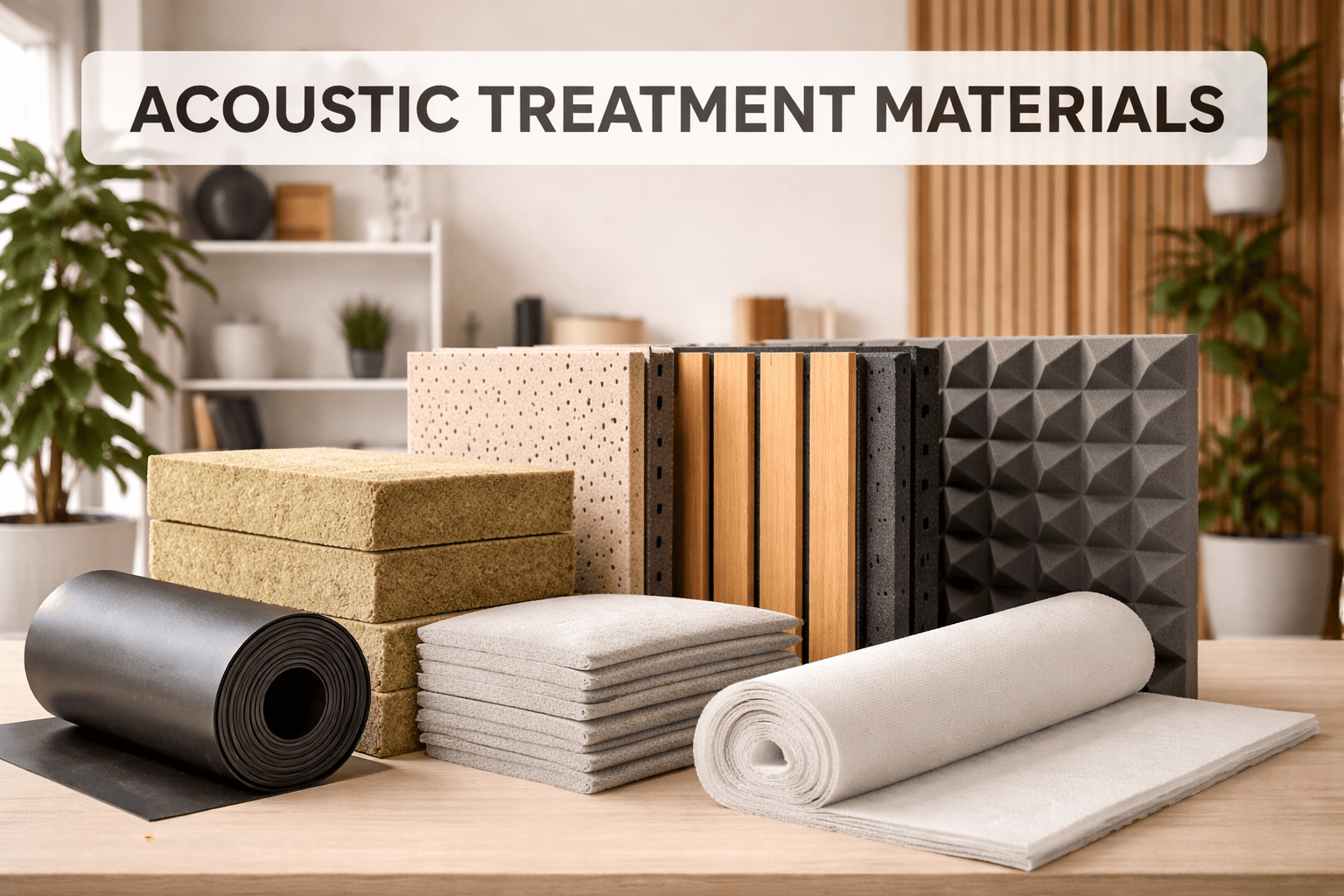
In a world that never stops buzzing, the spaces we inhabit have the power to either drain us or restore us. The right acoustic treatment material doesn’t just change how a room sounds, it changes how you feel inside it.
Close your eyes for a moment. Imagine a room where outside noise dissolves at the door. A home office where you can hear yourself think. A bedroom that cradles you in stillness. A studio where every note lands exactly where it should. Sounds like a dream, right? It doesn’t have to be.
Sound is invisible yet its presence (or absence) shapes our mood, focus, productivity, and even our health. Chronic noise exposure has been linked to elevated cortisol levels, disrupted sleep, and cognitive decline. The walls around you aren’t just structural; they are filters between you and the rest of the world. And what you put on those walls, the acoustic material for walls you choose determines how much of the world gets in.
The Hidden Crisis in Your Walls
Most people don’t realize how profoundly sound affects their daily life until they experience genuine quiet. Urban apartments buzz with traffic. Open-plan offices hum with overlapping conversations. Home studios suffer from flutter echoes that make recordings feel amateur. Even a living room with hard floors and bare walls can feel weirdly stressful because of acoustics, not décor.
Hard surfaces like concrete, glass, drywall, tiles reflect sound waves, causing them to bounce and accumulate. The result? A phenomenon called reverb, or worse, standing waves that make certain pitches almost unbearable. Every time sound bounces uncontrolled, your brain has to work harder to process conversations, focus on tasks, or simply relax.
That’s where acoustic treatment materials come in. These are specially engineered materials designed to absorb, diffuse, or block sound energy turning chaotic, reflective spaces into environments where sound behaves the way you want it to.
What Are Acoustic Treatment Materials, Really?
Think of acoustic treatment materials as the architecture of sound. Just as you’d use insulation to manage heat, these materials manage sound energy. The field encompasses everything from foam panels and fabric-wrapped boards to mass-loaded vinyl and specialized plasters but the goal is always the same: to give you control over your acoustic environment.
The science behind them is elegantly simple. Sound travels as waves. When those waves hit a soft, porous material, the energy converts to a tiny amount of heat through friction within the material’s fibers. The sound is absorbed before it can reflect back into the room. The result: a quieter, cleaner, more comfortable space.
The Three Pillars of Acoustic Control
- Absorption — reduces echo and reverberation within a room by soaking up sound energy.
- Diffusion — scatters sound waves so they spread evenly, preventing dead spots and harsh reflections.
- Blocking (Isolation) — stops sound from traveling between rooms or entering from outside.
A well-designed acoustic treatment plan typically combines all three. Understanding which pillar your space needs most is the first step to choosing the right solution.
“Silence is not the absence of sound. It is the presence of intention and the right acoustic material turns that intention into reality.”
Acoustic Material for Walls: Where the Magic Happens
Walls are the largest surface area in any room. They’re also the most acoustically influential. Choosing the right acoustic material for walls is arguably the single most impactful decision you can make in any soundproofing or treatment project whether you’re designing a professional recording studio, a home theater, a corporate boardroom, or simply a bedroom that feels like a retreat.
Modern acoustic material for walls has evolved far beyond the crude, grey foam tiles of the early studio era. Today’s options are sophisticated, aesthetically stunning, and engineered for specific performance outcomes. Let’s explore the landscape.
Fabric-Wrapped Acoustic Panels
These are the workhorses of professional acoustic treatment. A rigid core of high-density fiberglass or mineral wool is wrapped in breathable acoustic fabric, creating a panel that’s as beautiful as it is functional. They come in virtually any size, shape, and fabric color making them equally at home in a recording studio or a living room wall.
Acoustic Foam Panels
Lightweight, affordable, and easy to install, foam panels are the entry-level choice for many home recording enthusiasts and podcasters. The wedge or pyramid shapes are designed to break up sound waves rather than simply reflecting them flat. While they don’t offer isolation, they are excellent absorbers of mid to high frequencies.
Mineral Wool & Fiberglass Batts
Installed inside wall cavities or in freestanding frames, mineral wool and fiberglass batts are among the most effective acoustic treatment materials for broadband absorption meaning they tackle a wide range of frequencies, including the notoriously difficult low-end bass.
Acoustic Plaster & Spray Treatments
For a seamless, architectural finish, acoustic plasters and spray-on treatments allow walls and ceilings to absorb sound while looking like standard smooth plaster. Increasingly popular in high-end hospitality, healthcare, and corporate spaces, these treatments are part of the invisible future of acoustic design.
Read more: Are Acoustic Material for Wall Just for Looks? Have a Check on Reality
The Versatile Power of Acoustic Sheet Material
One of the most underappreciated innovations in the world of soundproofing is acoustic sheet material. Unlike bulky panels or cavity insulation, acoustic sheets are thin, flexible, and remarkably powerful making them ideal for applications where space is at a premium or where a discreet solution is needed.
The most popular form is Mass Loaded Vinyl, or MLV. Despite being only a few millimeters thick, acoustic sheet material like MLV is dense enough to dramatically reduce airborne sound transmission through walls, floors, and ceilings. It’s the secret weapon of apartment dwellers tired of hearing their neighbors, home theater enthusiasts chasing that immersive experience, and commercial builders aiming for code compliance without sacrificing design.
Acoustic sheet materials can be layered behind drywall, sandwiched between structural elements, or even draped as temporary barriers. Their flexibility makes them uniquely suited to irregular spaces, making retrofitting older buildings far more practical than it once was. When combined with other acoustic treatment materials, they contribute to a truly comprehensive approach to sound control.
Choosing the Right Solution: A Room-by-Room Guide
Not all rooms are created equal and neither are their acoustic challenges. Here’s how to think about selecting acoustic material for walls and beyond in different environments:
- Home Recording Studios & Podcasting Rooms: Prioritize absorption with fabric-wrapped panels on first reflection points, bass traps in corners, and possibly acoustic sheet material behind drywall for isolation.
- Home Theaters: A combination of absorption and diffusion creates the cinematic experience. Use rear-wall diffusers and side-wall absorption panels.
- Home Offices: Simple fabric panels on the wall behind your monitor and a rug on the floor can transform a reverberant room into a focused, professional-sounding space.
- Bedrooms: Heavyweight curtains, upholstered headboards, and a layer of acoustic sheet material behind the shared wall can turn a noisy room into a sanctuary.
- Commercial Offices: Ceiling baffles, acoustic partitions, and acoustic material for walls in meeting rooms ensure speech privacy and reduce the ambient din of open-plan layouts.
Aesthetics Meet Acoustics: The New Design Frontier
One of the most exciting developments in recent years is the marriage of acoustic function with genuine design beauty. The days of sacrificing a room’s appearance for good sound are over. Today, leading designers and architects treat acoustic treatment materials as a canvas.
Geometric wood diffusion panels double as striking wall art. Felt tiles in warm, earthy tones create texture-rich feature walls that are also highly absorbent. Stretched fabric systems allow acoustic panels to display printed photographic images turning your soundproofing investment into gallery-quality interior décor. The result is spaces that don’t just sound better; they look intentional, considered, and deeply human.
This shift matters because it removes the last barrier to adoption. When acoustic sheet material and panels can be beautiful, when treatment can enhance a space’s character rather than compromise it, the argument for investing in acoustics becomes irresistible.
Serenity is a Design Choice You Make Today
We pour enormous energy into the visual design of our spaces, paint colors, furniture, lighting. But sound shapes our experience of a room just as profoundly as sight. The hum of a poorly treated office, the echo of a bare apartment, the bleed of noise through thin walls, these aren’t minor inconveniences. They are silent stressors quietly eroding your wellbeing, day after day.
The good news is that the solution is more accessible, more affordable, and more beautiful than ever before. Whether you begin with a single panel of acoustic material for walls in your home office, line a shared wall with acoustic sheet material for immediate relief, or invest in a full suite of acoustic treatment materials for a professional-grade result, every step you take toward better acoustics is a step toward a better quality of life.
Serenity is not a luxury reserved for the privileged few or the professionally equipped. It is a design choice that starts with understanding what’s on your walls, and having the courage to change it.
Ready to Transform Your Space?
From a single room to an entire building, the right acoustic treatment materials make every environment more livable, more productive, and more peaceful. Start your journey toward true acoustic serenity today with us.