
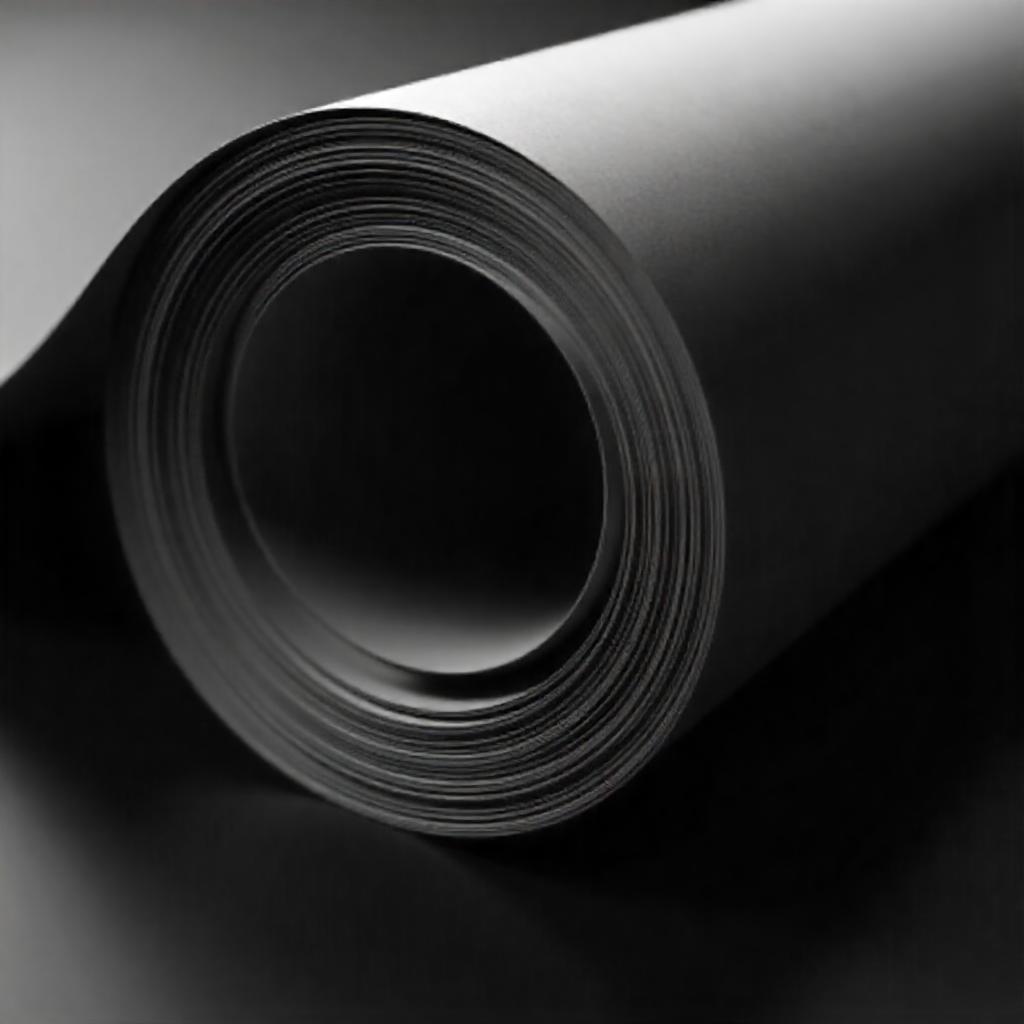
In a space that never truly goes quiet, noise has become one of the most underestimated disruptors of comfort, productivity, and well-being. From traffic rumbling through walls to conversations leaking across rooms, unwanted sound has a way of traveling where it doesn’t belong. This is where Mass Loaded Vinyl steps in but not as a decorative solution, but as a powerful, invisible shield designed to stop noise transmission at its source.
Unlike soft acoustic panels that absorb echo, MLV soundproofing focuses on blocking sound altogether. It works silently behind walls, ceilings, floors, and partitions, forming a dense barrier that resists sound waves and prevents them from passing through structures. If you’re searching for a proven, professional-grade noise control solution, understanding how a mass loaded vinyl sound barrier works can change the way you design and experience spaces.
Understanding the Real Problem: Why Noise Travels so Easily?
Sound is energy. Once created, it looks for paths through air, gaps, vibrations, and most importantly, through building materials. Lightweight walls, hollow partitions, metal studs, and even glass surfaces allow sound waves to pass with minimal resistance.
Many people confuse acoustic treatment with soundproofing. Acoustic solutions improve sound quality within a space, but they don’t necessarily stop noise from entering or exiting it. MLV mass loaded vinyl, on the other hand, addresses the structural weakness that allows sound to travel in the first place.
By adding mass and flexibility together, Mass Loaded Vinyl interrupts sound transmission paths, making it one of the most reliable soundproofing materials available today.
What is Mass Loaded Vinyl and Why is it so Effective?
Mass Loaded Vinyl is a dense, flexible sheet material engineered specifically for sound blocking. Unlike rigid boards, it bends easily while maintaining high surface weight, which is the key to its performance.
At its core, MLV mass loaded vinyl works on a simple principle:
More mass = less sound transmission.
But mass alone isn’t enough. Traditional dense materials can reflect sound or create vibration issues. What makes MLV soundproofing unique is its limp, non-rigid nature. This flexibility prevents sound waves from efficiently transferring vibrations through the material.
Key characteristics of Mass Loaded Vinyl:
- High density in a thin profile
- Flexible and easy to install
- Non-resonant, reducing vibration transfer
- Compatible with walls, ceilings, floors, and ducts
This combination makes Mass Loaded Vinyl a preferred choice for professional soundproofing across industries.
How MLV Soundproofing Actually Stops Noise
To understand how MLV soundproofing works, imagine sound as a force trying to push its way through a wall. Lightweight materials give in easily, allowing vibrations to pass through. A mass loaded vinyl sound barrier resists that force.
Here’s how it performs:
- Adds Critical Mass
Sound waves lose energy when they hit dense materials. Mass Loaded Vinyl significantly increases the mass of a structure without adding bulk. - Blocks Airborne Sound
Conversations, music, traffic, and machinery noise are airborne sounds. MLV mass loaded vinyl effectively blocks these by acting as an airtight layer. - Reduces Structural Vibration
Because it is limp, Mass Loaded Vinyl does not transmit vibration efficiently, unlike rigid boards or metal sheets. - Seals Weak Points
Installed behind drywall or under flooring, MLV soundproofing closes the gaps where sound typically leaks.
The result is measurable noise reduction that traditional materials struggle to achieve.
Where a Mass Loaded Vinyl Sound Barrier makes the Biggest Impact
The versatility of Mass Loaded Vinyl is one of its biggest strengths. It can be used in a wide range of applications where noise control is critical.
1. Walls and Partitions
In offices, homes, hotels, and studios, MLV soundproofing is installed behind drywall to prevent sound transfer between rooms.
2. Ceilings and Floors
Footfall noise and overhead disturbances can be controlled by adding MLV mass loaded vinyl under flooring systems or above false ceilings.
3. Mechanical Rooms and Equipment Enclosures
Machinery noise can be significantly reduced using a mass loaded vinyl sound barrier wrapped around equipment or installed within enclosures.
4. Ducts and Pipes
Noise often travels through HVAC systems. Mass Loaded Vinyl can line ducts to prevent sound migration between spaces.
5. Doors and Windows (Supplementary Use)
While not a replacement for solid doors, MLV soundproofing improves their performance when layered correctly.
Why Mass Loaded Vinyl Outperforms Traditional Soundproofing Materials
Many materials claim to reduce noise, but few match the effectiveness of MLV mass loaded vinyl when it comes to blocking sound transmission.
Compared to Foam and Fabric Panels
Foam absorbs echo; it does not stop sound from escaping. Mass Loaded Vinyl blocks sound at the structural level.
Compared to Gypsum Boards
Multiple layers of drywall add mass, but they increase thickness and rigidity. MLV soundproofing delivers higher density with minimal space loss.
Compared to Concrete or Brick
Concrete is effective but impractical for retrofits. Mass Loaded Vinyl offers similar benefits without structural changes.
This makes Mass Loaded Vinyl ideal for both new construction and renovation projects.
Installation Flexibility: Designed for Real-World Projects
One of the most overlooked advantages of MLV mass loaded vinyl is how adaptable it is during installation. It can be:
- Sandwiched between drywall layers
- Hung like a curtain inside wall cavities
- Laid beneath flooring systems
- Wrapped around pipes and ducts
Because Mass Loaded Vinyl is thin yet heavy, it integrates seamlessly with existing building systems. This flexibility makes MLV soundproofing a practical choice even when space, time, or structural changes are limited.
Understand the Theory behind Mass and Decoupling
Effective soundproofing relies on three principles: mass, damping, and decoupling. Mass Loaded Vinyl contributes strongly to the first two.
When paired with resilient channels, insulation, or double-stud walls, MLV mass loaded vinyl enhances decoupling by reducing vibration transfer between surfaces. This layered approach is why a mass loaded vinyl sound barrier is often used in professional-grade soundproof assemblies.
Common Myths About MLV Soundproofing
Myth 1: MLV alone can make a room completely soundproof
Reality: Mass Loaded Vinyl works best as part of a system. It significantly reduces noise but must be combined with proper sealing and construction methods.
Myth 2: Thicker always means better
Reality: Density matters more than thickness. MLV mass loaded vinyl achieves high performance in thin profiles.
Myth 3: MLV is only for studios
Reality: Homes, offices, hospitals, hotels, and industrial spaces all benefit from MLV soundproofing.
Sustainability and Long-Term Performance
Modern Mass Loaded Vinyl products are designed for durability and long service life. When installed correctly, MLV mass loaded vinyl does not degrade, sag, or lose density over time. This makes it a long-term investment in acoustic comfort.
Additionally, its ability to retrofit existing spaces reduces the need for demolition, supporting more sustainable building practices.
Choosing the Right Mass Loaded Vinyl Sound Barrier
Not all Mass Loaded Vinyl products are the same. Performance depends on:
- Surface weight (kg/m²)
- Installation method
- Compatibility with surrounding materials
Selecting the right mass loaded vinyl sound barrier ensures optimal noise reduction without unnecessary cost or complexity.
Quiet Confidence of Building with Mass Loaded Vinyl
Noise control is the primary requirement whether it’s ensuring privacy in workplaces, comfort in homes, or compliance in commercial projects, MLV soundproofing offers a reliable, professional solution.
Mass Loaded Vinyl doesn’t demand attention. It works quietly, hidden behind finishes, doing what it does best, stopping noise from crossing boundaries it was never meant to cross.
Conclusion
Sound has a way of invading spaces, disrupting focus, rest, and communication. The most effective response isn’t temporary fixes or surface treatments as it’s a structural solution that stops noise at its core.
By integrating MLV mass loaded vinyl into walls, ceilings, floors, and systems, you create a true mass loaded vinyl sound barrier that protects spaces from unwanted noise transmission. Strong, flexible, and proven, Mass Loaded Vinyl stands as one of the most dependable soundproofing materials available today.