
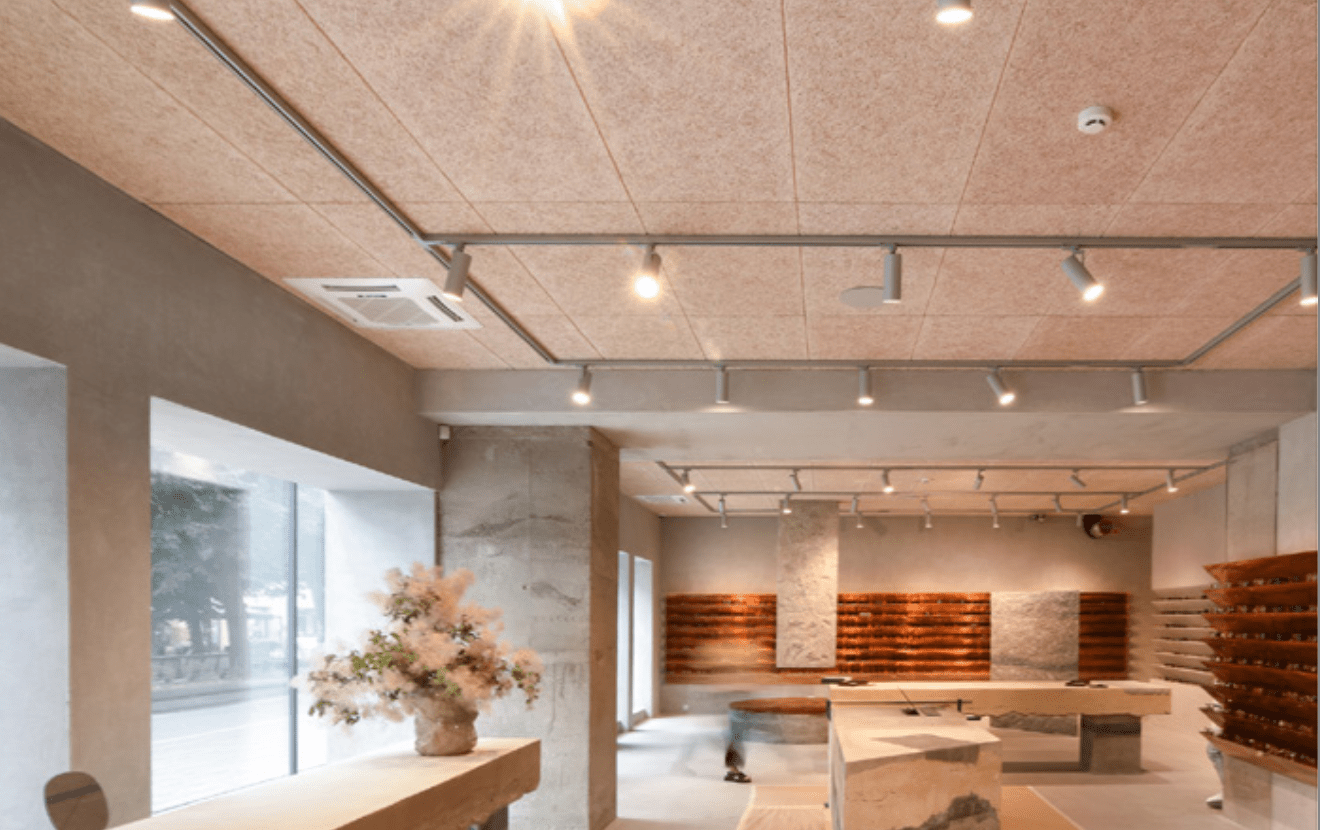
Walk into a space with clean lines, natural textures, and a calm, balanced atmosphere. Nothing feels loud. Conversations are clear. There’s no echo chasing your words, no background noise stealing attention. Visually, the ceiling or wall looks warm and understated but acoustically? It performs like magic.
That quiet transformation is the power of a wood wool acoustic panel.
In today’s architecture and interior design, sound is no longer an afterthought. As open-plan offices, collaborative workspaces, educational institutions, hospitality zones, and wellness-focused interiors become the norm, controlling noise has become just as important as aesthetics. This is where wood wool panels step in for blending performance, sustainability, and design flexibility in a way few materials can.
Let’s uncover the truth behind wood wool acoustic solutions, understand how they work, and explore why designers and specifiers are increasingly choosing wood wool ceiling systems to create spaces that don’t just look good but sound right.
Wood Wool Acoustic Panel… Have a Check?
At first glance, a wood wool acoustic panel looks like a textured board made from fine strands of wood. But beneath that simple appearance lies a carefully engineered acoustic solution.
A wood wool acoustic panel is manufactured by binding long, thin wood fibers (often spruce or pine) with mineral-based binders such as cement or magnesite. The result is a rigid, porous panel that absorbs sound rather than reflecting it.
Unlike smooth, hard surfaces that cause sound waves to bounce endlessly, wood wool panels trap and diffuse sound within their fibrous structure. This reduces reverberation, echo, and overall noise levels creating acoustically comfortable environments.
Reason behind why ‘Sounds’ matters alot today
Noise pollution is one of the most overlooked challenges in contemporary design. In offices, excessive noise reduces productivity and increases stress. In classrooms, poor acoustics affect concentration and learning outcomes. In restaurants and hotels, noise can ruin the customer experience even if the interiors are visually stunning.
This is where a wood wool ceiling or wall system becomes transformative. It addresses sound at its source, making spaces calmer, more functional, and more human-centric.
How Wood Wool Panels “Sound Like Magic”?
The magic of a wood wool acoustic panel lies in its porous structure. Sound waves enter the open fibers, lose energy through friction, and dissipate instead of bouncing back into the room.
Here’s what that means in real-life terms:
- Clearer conversations
- Reduced background noise
- Improved speech intelligibility
- Less listening fatigue
Whether installed as a wood wool ceiling or as wall-mounted panels, the result is a space that feels balanced and comfortable without looking overtly “acoustic.”
Here are the Aesthetic Advantage of these Acoustic Panels
One of the biggest myths about acoustic materials is that they compromise design. Wood wool panels prove the opposite.
Their natural texture adds depth and character to interiors. Available in various thicknesses, fiber sizes, and colors, a wood wool acoustic panel can complement minimalist, industrial, biophilic, or contemporary design languages.
Architects often use wood wool ceiling systems to:
- Add visual warmth to large spaces
- Break monotony in expansive ceilings
- Create rhythmic patterns and grids
- Highlight sustainable design intent
Unlike hidden acoustic solutions, wood wool panels proudly become part of the visual story.
Sustainability: The Silent Strength of Wood Wool Panels
Sustainability is no longer optional as it expected. One of the strongest arguments for a wood wool acoustic panel is its eco-friendly profile.
Most wood wool panels are made using renewable wood resources and environmentally responsible manufacturing processes. They are often recyclable, low in VOC emissions, and contribute to healthier indoor air quality.
When used as a wood wool ceiling, these panels support green building certifications and align with sustainable design philosophies without sacrificing performance.
Where Wood Wool Acoustic Panels Perform Best
The versatility of a wood wool acoustic panel makes it suitable for a wide range of applications. Its balanced performance and durability allow it to function in both functional and high-traffic environments.
Offices and Corporate Spaces
Open offices benefit greatly from wood wool ceiling systems that reduce ambient noise and improve focus without visually overpowering the space.
Educational Institutions
Classrooms, lecture halls, and libraries rely on wood wool panels to enhance speech clarity and reduce distractions for supporting better learning outcomes.
Hospitality and Retail
Restaurants, cafés, and hotels use wood wool acoustic panels to maintain a lively atmosphere without overwhelming guests with noise.
Healthcare and Wellness
Calm environments are essential in hospitals, clinics, and wellness centers. Wood wool panels contribute to acoustic comfort while maintaining hygiene and durability.
Cultural and Public Buildings
Auditoriums, museums, and community spaces often use wood wool ceiling systems for balanced acoustics and architectural expression.
Wood Wool Ceiling vs Other Acoustic Materials
Why choose a wood wool ceiling over fabric panels, foam, or perforated boards?
- Durability: Wood wool panels are impact-resistant and long-lasting.
- Fire Performance: Many wood wool acoustic panels offer excellent fire ratings.
- Moisture Resistance: Suitable for semi-humid environments where fabric panels fail.
- Design Integration: They look architectural, not temporary.
- Sustainability: Natural materials outperform synthetic alternatives.
This balance makes wood wool panels a preferred choice for long-term projects where performance and aesthetics must coexist.
Installation Flexibility and Design Freedom
A wood wool acoustic panel offers remarkable flexibility in installation. Panels can be:
- Direct-mounted on walls
- Suspended as a wood wool ceiling
- Installed in grids, clouds, or baffles
- Customized in size and color
This adaptability allows designers to treat acoustics as a design opportunity rather than a constraint.
The Psychological Impact of Better Acoustics
Sound influences how we feel in a space often subconsciously. Poor acoustics create stress, fatigue, and irritation. Balanced acoustics promote calm, clarity, and comfort.
By integrating wood wool panels, spaces feel:
- More welcoming
- Less chaotic
- Easier to focus
- More enjoyable to occupy
That’s the unseen magic of a wood wool acoustic panel, it changes how people experience space without them realizing why.
Maintenance and Longevity of Wood Wool Panels
Another often-overlooked advantage of wood wool panels is their low maintenance. They resist sagging, tearing, and discoloration better than many soft acoustic materials.
When installed as a wood wool ceiling, they maintain their performance and appearance for years, making them a cost-effective acoustic solution over the building’s lifecycle.
Why Wood Wool Acoustic Panels Are a Smart Investment
Investing in a wood wool acoustic panel is not just about reducing noise—it’s about improving the quality of space. Better acoustics lead to:
- Higher productivity
- Better communication
- Enhanced user satisfaction
- Stronger design value
In commercial and public spaces, this translates into measurable returns—whether through improved employee performance or enhanced customer experience.
Truth Revealed: Normal Looks with Extraordinary Sound
The beauty of a wood wool acoustic panel lies in its subtlety. It doesn’t scream for attention. It doesn’t rely on flashy finishes. It simply works—quietly, consistently, and effectively.
That’s why it looks normal.but sounds like magic.
Final Thoughts
In the future of interior design, sound will be as important as light, texture, and form. Spaces will be judged not only by how they look but by how they feel and sound.
By choosing wood wool panels, designers and decision-makers embrace a solution that is natural, functional, and timeless. A wood wool ceiling doesn’t just absorb sound as it elevates the entire spatial experience.
Ready to design spaces that sound as good as they look?
Explore how a wood wool acoustic panel can transform your space.