
Every space we walk into has a story. Sometimes it’s loud and vibrant. Other times, calming and soft. But what determines how we feel within those walls? Beyond architecture and furniture, there’s a silent influencer shaping our emotions—material psychology.
Material psychology explores how material selection affects emotions, decisions, productivity, and comfort within spaces. Whether it’s a corporate office, school, hospital, or home, every design element influences human behavior more than we notice.
Among the many materials used in modern construction and interiors, sound-absorbing materials—like Acoustic materials, Acoustic Panels, Acoustic Sheets, Acoustic Spray, and Acoustic Treatment—have emerged as crucial components for shaping how people experience built environments.
Let’s explore why.
Understanding Material Psychology…
Materials are not passive. Their colors, textures, reflectiveness, and sound behavior evoke immediate emotional responses. A polished marble lobby might feel grand yet intimidating. A wooden café interior feels comforting and warm.
Materials create:
- Cognitive responses → How our brain interprets the space
- Emotional responses → Calmness, excitement, focus, or discomfort
- Behavioral responses → How we interact and perform tasks
When sound enters this equation, behavioral impact becomes undeniable.
Bad acoustics = frustration, distraction, stress
Good acoustics = clarity, focus, comfort
That’s where carefully chosen Acoustic materials become psychological assets—not just technical solutions.
Why Sound Changes Human Behavior in Space?
Human reactions to sound are instinctive. Noise levels influence thinking processes, emotional states, and decision-making ability. When excessive sound remains unmanaged, people tend to feel stressed and distracted. In contrast, controlled sound levels help the brain function smoothly, leading to better communication, deeper concentration, and overall mental comfort.
This influence extends across sectors such as education, healthcare, hospitality, and workplaces where acoustics impact performance and wellbeing. The better the sound quality inside a room, the more positive the behavioral response becomes.
Thoughtful Acoustic Treatment empowers designers to support positive human behavior.
Acoustic Materials: Invisible Design Element Shaping Experience
The most impactful design solutions are often the ones that remain unnoticed. Acoustic materials fall into this category. They reduce echo and maintain sound balance by absorbing unnecessary noise waves. With these elements in place, people experience natural communication without discomfort from disruptions that echo around a room.
When sound behaves properly within a space, attention increases and stress naturally reduces. These outcomes are a result of strategically choosing materials that work silently in the background.
Acoustic Panels: Encouraging Focus & Emotional Harmony
Open offices, schools, and commercial spaces battle noise constantly. That’s why Acoustic Panels are increasingly used on walls and ceilings as both functional and aesthetic elements.
Their impact on behavior:
- Employees stay more focused → better productivity
- Teams communicate efficiently → fewer conflicts
- Students grasp information better → improved learning
- Guests feel mentally at ease → positive brand experience
Panels can be designed with colors and textures that align with emotional messaging—soft tones for calming, bright hues for energizing.
They’re not just panels. They are behavioral influencers.
Acoustic Sheets: Comfort that Travels with You
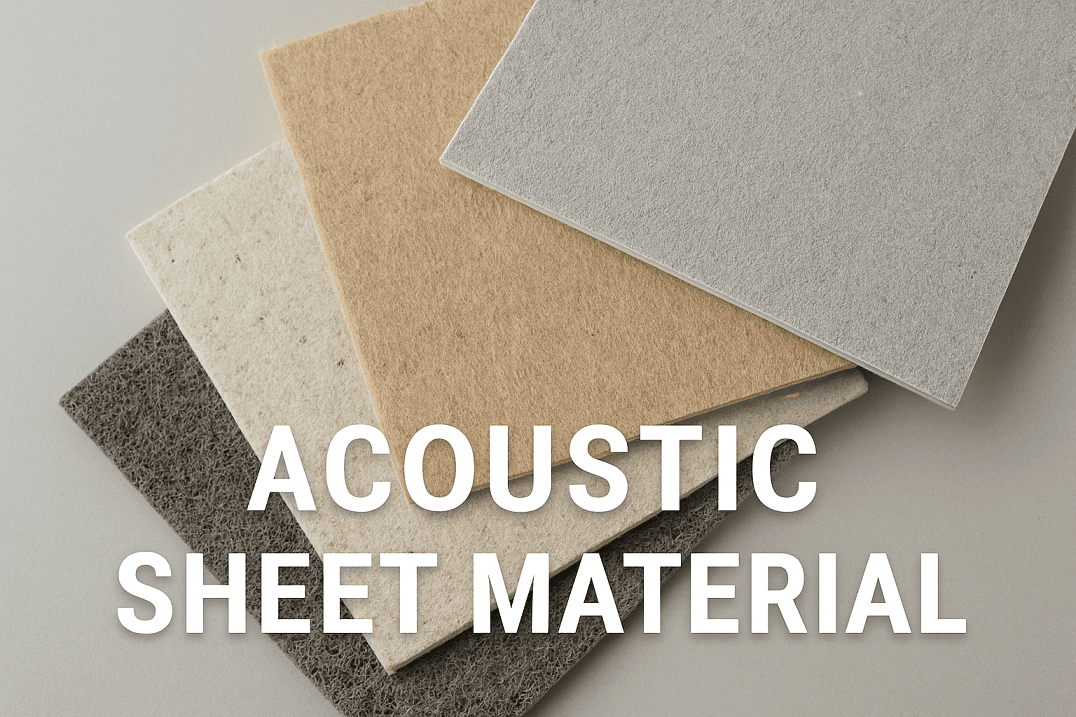
Acoustic Sheets are versatile and can be installed behind facades, ceilings, partitions, or flooring surfaces. Their function remains invisible, while their impact is noticeable through reduced noise transfer between rooms. This subtle improvement helps people feel secure and undisturbed inside a space.
They enhance:
- Hospitality experience ensuring privacy and peaceful stays
- Workspace performance zones for deep focus
Invisible comfort leads to subtle psychological transformation. People behave honestly and confidently when sound doesn’t overpower their space.
A better acoustic envelope = A better quality of life.
Acoustic Spray: Modern Minimalism with Maximum Calm
Modern design favors fluid surfaces and clean lines. Acoustic Spray allows designers to maintain minimalist aesthetics while still controlling noise.
Perfect for:
- Exposed ceiling designs
- Industrial-style interiors
- Large halls, auditoriums, retail spaces
With fewer auditory disturbances, people feel more grounded and aware of the environment around them. Good acoustics reinforce feelings of comfort and reduce the cognitive effort required to function in noisy spaces.
Acoustic Treatment: Designing for the Human Brain
Comprehensive Acoustic Treatment considers how sound interacts with human psychology. It includes a strategy of panels, sheets, ceilings, and sprays designed together to optimize the environment.
When spaces are treated acoustically, individuals display better concentration, smoother communication, and stronger emotional wellbeing. In environments like classrooms and hospitals, the impact extends to crucial results such as improved learning outcomes and quicker recovery.
The Power of Choice: Why Material Selection Defines Experience
Selecting materials is not a visual decision alone. Materials influence behavior, and every choice defines how space will function. Hard, reflective surfaces often lead to more echo and noise, making rooms feel intense or overwhelming. Sound-absorbing materials create more calmness and emotional stability.
Choosing the right acoustic solution ensures the space supports the intended behavior.
The psychology behind choice includes:
- Intent of the space
A library = quiet focus
A restaurant = controlled buzz + comfortable talk - Behavioral goals
Collaboration? Creativity? Learning? Healing? - Sensory harmony
Balancing sights, sounds, and textures
Material decisions become emotional decisions.
Design with Purpose: Future of Human-Centric Interiors
We are entering an era where design goes beyond appearance. Spaces must care for humans emotionally, mentally, and behaviorally.
Tomorrow’s design priorities include:
- Mental wellness as a core outcome
- Spaces adapting to different sensory needs
- Acoustic comfort recognized as a basic necessity
- Materials selected based on psychological influence
This evolution places Acoustic Panels, Acoustic Sheets, Acoustic Spray, and broader Acoustic Treatment at the center of design conversations.
Because people thrive in environments that feel safe, balanced, and supportive.
Conclusion:
Materials are the Silent Guides of Human Behavior
Design is about experiences that shape us and materials are the silent guides that influence how we think, feel, and act.
By choosing sustainable and thoughtfully engineered Acoustic materials, designers can create spaces where:
- Minds stay focused
- Communication flows clearly
- Emotions remain balanced
- Wellness becomes a design outcome
The psychological advantages of good acoustics show that material selection plays a deeper role than simply creating visual impact. It shapes how people live, work, learn, and connect with the world around them. Every space has a purpose and acoustics help fulfill it.
Human-centric design begins not with what we see, but with what we feel.