
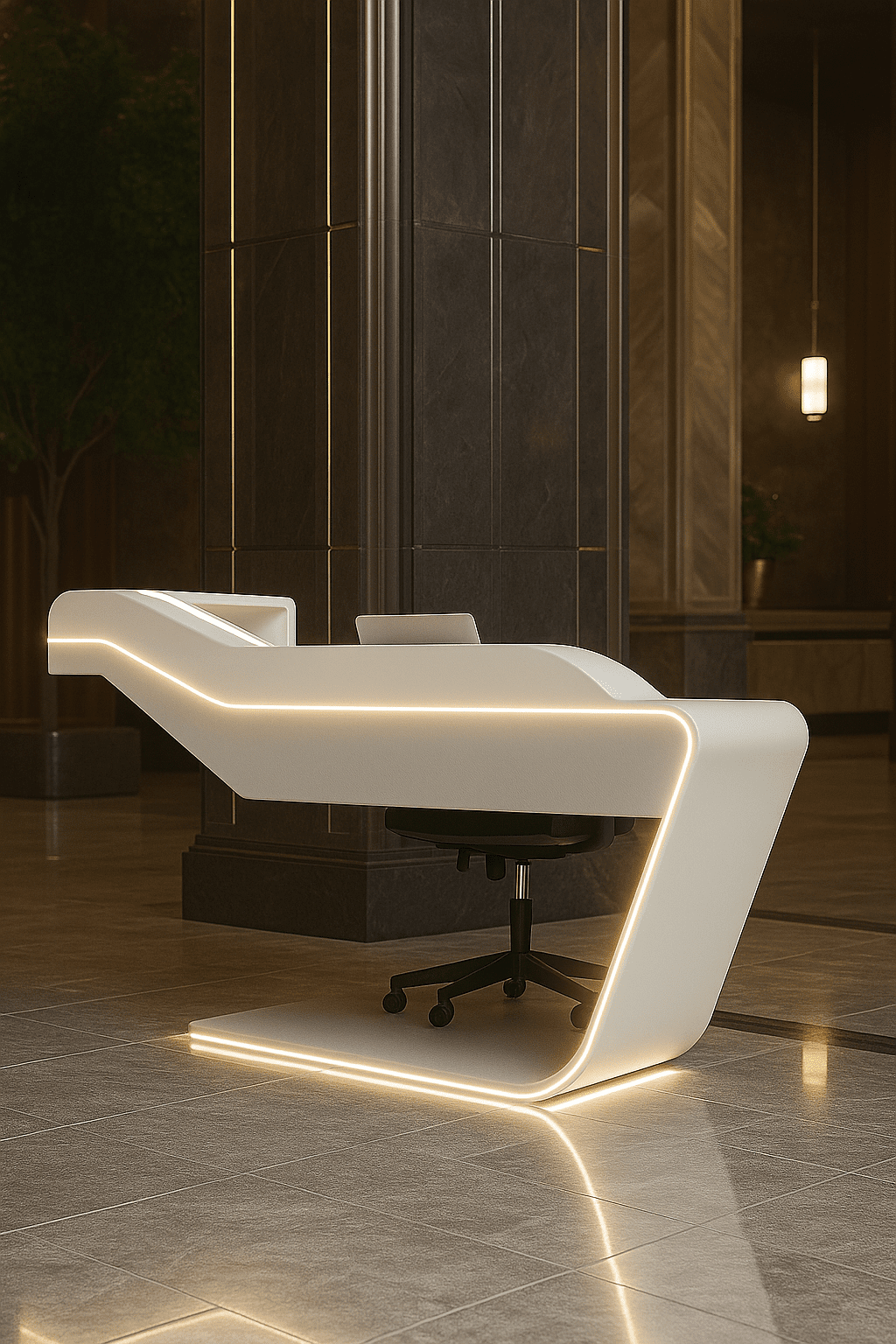
In contemporary interior and furniture design, straight lines are quietly giving way to fluid, sculptural forms that feel more natural, inviting, and human-centric. From softly contoured reception desks to seamless lounge seating and sculpted wall-integrated furniture, the demand for organic geometry is rising across residential, hospitality, retail, and workspace environments.
At the heart of this transformation lies a remarkable material innovation: acrylic solid surface. Unlike rigid laminates or brittle stone, this advanced material can be heated, shaped, and formed into graceful curves without compromising strength or finish. Thermoforming has unlocked the possibility of creating furniture that feels carved from a single continuous form precisely the aesthetic today’s designers and architects seek.
This article explores how thermoforming works, why acrylic solid surface sheet is ideal for curved furniture, how to optimize cost and sourcing, and how designers can translate organic concepts into buildable, durable realities.
The Rise of Organic Furniture Forms in Modern Interiors
Design language is evolving toward softness and flow. Curves evoke comfort, movement, and biomorphic inspiration qualities that resonate strongly in wellness-focused and experiential spaces.
Consider how organic furniture enhances environments:
- Reception counters feel welcoming rather than transactional
- Seating flows naturally within spatial circulation
- Retail displays guide movement subconsciously
- Workspaces feel less rigid and more collaborative
Traditional materials struggle with such geometry. Wood requires complex joinery, stone resists bending, and metal demands heavy fabrication. In contrast, acrylic solid surface offers seamless shaping with a monolithic appearance which is ideal for continuous curves.
Understanding Thermoforming: The Science Behind Curved Acrylic Solid Surface
Thermoforming is a controlled heating and shaping process that temporarily softens an acrylic solid surface sheet, allowing it to be bent or molded into desired curves. Once cooled, the material retains the new shape permanently without losing structural integrity.
How Thermoforming Works
- Heating – The acrylic solid surface sheet is heated evenly to a pliable temperature
- Forming – The softened sheet is placed over or into a mold
- Cooling – The material sets in the curved shape
- Finishing – Edges are joined seamlessly and polished
Because the material is homogeneous throughout, sanding or finishing reveals no layers ensuring consistent color and texture even across tight curves.
Why Acrylic Solid Surface is Ideal for Curved Organic Furniture
Thermoforming works with several plastics, but the acrylic solid surface stands apart due to its unique combination of aesthetic, structural, and functional advantages.
- Seamless Curves Without Visible Joints
Multiple acrylic solid surface sheets can be bonded chemically, creating invisible seams. This allows large sculptural furniture pieces to appear carved from a single block.
- Uniform Color Through Thickness
Unlike laminates, the color of an acrylic solid surface sheet runs throughout the material. After forming or sanding, the finish remains consistent.
- High Strength After Forming
Thermoforming does not weaken the material when done correctly. Curved furniture retains durability suitable for commercial environments.
- Hygienic and Non-Porous Surface
Organic furniture often integrates with countertops or seating. Acrylic solid surface is non-porous, stain-resistant, and easy to clean, ideal for healthcare, hospitality, and food environments.
- Repairable and Renewable Finish
Scratches or wear can be sanded out because the material is solid throughout. This extends furniture life and reduces lifecycle cost.
Design Possibilities with Thermoformed Acrylic Solid Surface Furniture
Thermoforming expands furniture design beyond planar construction into sculptural expression.
Curved Reception Counters
Flowing counters eliminate sharp edges and improve circulation. Designers can integrate lighting, branding, and storage seamlessly within the curved geometry using acrylic solid surface sheets.
Sculptural Seating and Benches
Continuous seating forms can be shaped ergonomically. The tactile smoothness of acrylic solid surface enhances comfort while maintaining durability.
Organic Retail Display Fixtures
Curved plinths, display tables, and shelving guide customer movement. Acrylic solid surface allows integrated shelving emerging from continuous surfaces.
Wall-Integrated Furniture
Furniture can merge with architectural surfaces, benches growing from walls or counters blending into partitions achievable through thermoformed acrylic solid surface sheets.
From Concept to Fabrication: Designing for Thermoformed Furniture
Designing curved furniture requires understanding material behavior. While the acrylic solid surface is flexible during forming, geometry and radius limits still apply.
Consider Bend Radius Early
Each acrylic solid surface sheet thickness has a minimum bend radius. Tight curves require thinner sheets or layered forming.
Use Sectional Geometry
Complex shapes are often created from multiple thermoformed components joined seamlessly. This allows larger organic forms while maintaining structural stability.
Integrate Structure Internally
Sub-frames or ribs support large spans. Acrylic solid surface sheets act as the visible skin over structural cores.
Plan Seam Placement Strategically
Though seams are invisible, placing them along curvature transitions improves fabrication efficiency and cost.
Acrylic Solid Surface Sheet Price: Understanding Cost Factors
One of the most common queries in curved furniture design is acrylic solid surface sheet price. While pricing varies by brand and thickness, thermoformed furniture cost depends on several factors beyond raw sheet price.
Key Price Drivers
- Sheet Thickness: Thicker acrylic solid surface sheets cost more but allow deeper sculpting and stronger spans.
- Color and Pattern: Special finishes or translucent variants influence acrylic solid surface sheet price.
- Thermoforming Complexity: Tight radii or compound curves require specialized molds and skilled labor.
- Fabrication Time: Organic forms demand more fabrication hours compared to flat furniture.
- Volume of Material: Large seamless forms require multiple sheets bonded together.
Despite higher initial fabrication cost, thermoformed acrylic solid surface furniture often proves economical over time due to durability and repairability.
Acrylic Sheets Near Me: Sourcing and Fabrication Considerations
Designers frequently search for acrylic sheets near me when planning thermoformed furniture. However, successful curved furniture projects require more than local material availability.
What to Look for When Sourcing
- Certified acrylic solid surface sheets suitable for thermoforming
- Fabricators experienced in curved forming
- Availability of molds or CNC support
- Matching color batches for seamless joins
- Technical guidance on bend radii
Local sourcing reduces logistics cost and lead time, but fabrication expertise is equally critical. Thermoforming quality directly impacts final geometry and surface finish.
Sustainability Advantages of Thermoformed Acrylic Solid Surface Furniture
Organic furniture created from acrylic solid surface sheets supports long-term sustainability goals.
Durability and Longevity
Curved acrylic solid surface furniture resists impact, moisture, and wear. Long service life reduces replacement frequency.
Repairability
Unlike laminates or coatings, damaged surfaces can be restored. This extends the product lifecycle significantly.
Low Waste Fabrication
Offcuts from acrylic solid surface sheets can often be reused in smaller components or repairs.
Hygienic Performance
Non-porous surfaces reduce the need for harsh cleaning chemicals beneficial in healthcare and hospitality.
Case-Inspired Applications: Where Curved Acrylic Solid Surface Excels
Thermoformed acrylic solid surface furniture is particularly effective in environments where experience and hygiene converge.
- Healthcare Reception and Nurse Stations: Soft curves reduce injury risk and improve patient comfort perception.
- Hospitality Bars and Lounges: Fluid counters and seating create immersive, sculptural interiors.
- Retail Experience Zones: Organic plinths and counters enhance product storytelling.
- Corporate Collaboration Spaces: Curved seating and tables encourage interaction and flow.
In each case, acrylic solid surface sheets enable seamless integration between architecture and furniture.
Common Challenges in Thermoformed Furniture and How to Overcome Them
While acrylic solid surface is highly adaptable, curved furniture fabrication requires careful planning.
Challenge 1: Surface Stress or Cracking
Solution: Maintain correct forming temperature and radius limits.
Challenge 2: Uneven Curvature
Solution: Use precision molds and controlled heating.
Challenge 3: Visible Seams
Solution: Match sheet batches and use expert bonding techniques.
Challenge 4: Cost Escalation
Solution: Optimize geometry into repeatable modules and rationalize sheet usage.
Future Trends: Parametric and Biophilic Furniture Forms
Thermoforming acrylic solid surface sheets align perfectly with emerging design directions.
- Parametric furniture generated from digital modeling
- Biophilic interiors with nature-inspired curves
- Seamless architecture-furniture integration
- Sculptural monolithic counters and seating
As computational design expands, acrylic solid surface becomes a primary material translating digital curves into physical form.
Practical Tips for Designers Using Acrylic Solid Surface Sheets
To maximize thermoforming success:
- Specify thermoformable acrylic solid surface sheets early
- Collaborate with fabricators during design development
- Test curvature prototypes before full production
- Optimize sheet thickness for radius and strength
- Balance aesthetics with fabrication feasibility
Early material integration prevents redesign and cost overruns.
Conclusion
Turning Organic Vision into Buildable Furniture Reality
The shift toward curved, organic furniture reflects a deeper evolution in spatial experience spaces that feel softer, more human, and more fluid. Achieving these forms at scale requires materials that combine flexibility, strength, and seamless beauty.
Acrylic solid surface uniquely fulfills this role. Through thermoforming, flat sheets transform into sculptural furniture with continuous geometry, hygienic performance, and long-term durability. From reception desks to seating landscapes, designers can now create furniture that feels grown rather than assembled.
As demand for experiential interiors grows, sourcing the right acrylic solid surface sheet, understanding acrylic solid surface sheet price, and collaborating with expert fabricators become essential steps in realizing curved furniture concepts. Whether searching for acrylic sheets near me or planning large architectural installations, the opportunity is clear: a thermoformed acrylic solid surface enables organic design to move from imagination to reality.
Ready to Shape Your Next Curved Furniture Concept?
If you’re exploring thermoformed furniture or organic interior elements, start by evaluating thermoformable acrylic solid surface sheets suited to your curvature and performance requirements. Engage experienced fabricators early, prototype critical curves, and unlock the full potential of seamless sculptural design.
Curves are no longer complex. With acrylic solid surfaces, they’re simply buildable.