
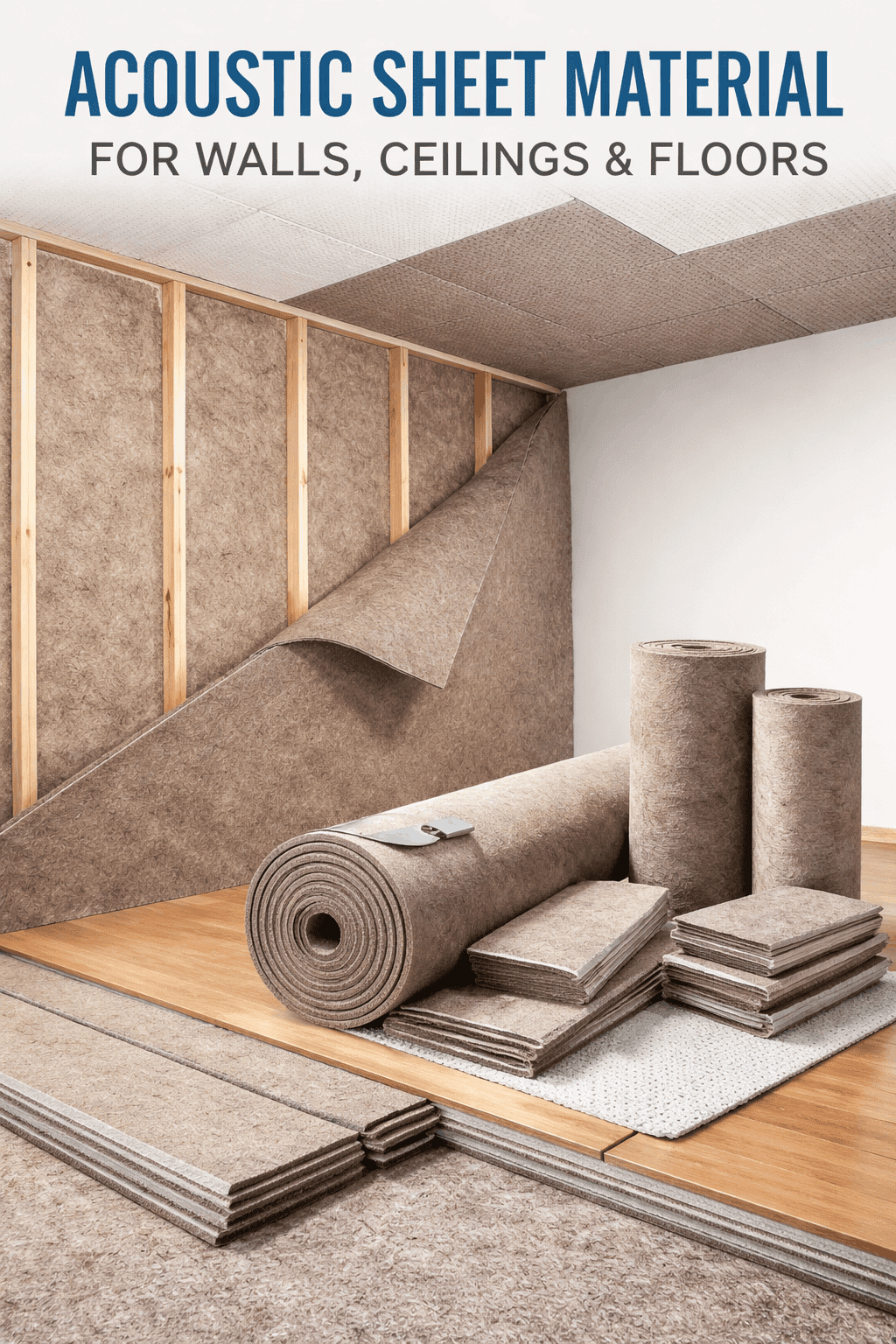
Sound is invisible, but its impact on a space is immediate. You feel it when conversations blur in an open office, when footsteps echo through corridors, or when privacy disappears behind thin walls. Long before people notice furniture, lighting, or finishes, they subconsciously react to how a space sounds. This is where acoustic sheet material becomes one of the most powerful yet often underestimated design tools.
From commercial buildings and institutional spaces to residences and hospitality environments, the demand for effective acoustic treatment materials has grown rapidly. Architects, interior designers, and facility managers are no longer asking if acoustics matter, but how to integrate the right acoustic material for walls, ceilings, and floors without compromising design intent.
This complete guide explores how acoustic sheet material works, where it performs best, and why it has become essential for creating comfortable, high-performing interiors.
What is Acoustic Sheet Material and Why is it Essential?
At its core, acoustic sheet material is engineered to manage sound behavior within enclosed spaces. Unlike conventional construction materials that reflect sound, acoustic sheets are designed to absorb, dampen, or block sound waves.
Sound travels through air and solid surfaces. When it strikes untreated walls, ceilings, or floors, it reflects repeatedly, creating reverberation, noise build-up, and discomfort. Acoustic treatment materials interrupt this cycle by controlling how sound energy moves through a space.
What makes acoustic sheet material especially valuable is its adaptability. It can be applied discreetly behind finishes or showcased as part of the interior language making it suitable for both functional and design-forward projects.
Understanding Sound Control: Absorption vs Insulation
Before selecting acoustic material for walls, ceilings, or floors, it’s important to understand what problem you’re solving.
- Sound absorption reduces echo and reverberation within a room.
- Sound insulation prevents sound from traveling between spaces.
- Vibration damping minimizes impact noise and structural transmission.
Different acoustic treatment materials address different challenges. Acoustic sheet material can be engineered for one or more of these functions, depending on density, thickness, and composition.
Acoustic Material for Walls: Where Sound Control Begins
Walls define the boundaries of a space and they are often the first surfaces sound interacts with. Using the right acoustic material for walls significantly improves speech clarity, privacy, and overall comfort.
How Acoustic Sheet Material Performs on Walls
When installed on or within wall systems, acoustic sheet material absorbs sound waves before they bounce back into the room. This reduces echo, controls mid- and high-frequency noise, and improves acoustic balance.
Where Wall-Based Acoustic Treatment Works Best
- Corporate offices and boardrooms
- Educational classrooms and libraries
- Hospitals and healthcare spaces
- Home theatres and living areas
- Hospitality lobbies and corridors
In open-plan environments, acoustic sheet material on walls prevents sound spill and creates defined acoustic zones without physical barriers.
Acoustic Sheet Material for Ceilings: Managing Sound from Above
Ceilings often account for the largest uninterrupted surface area in a room. Left untreated, they become powerful sound reflectors. Integrating acoustic sheet material into ceiling systems is one of the most effective ways to control reverberation.
Why Ceiling Acoustics Matter
Sound naturally rises. In spaces like offices, auditoriums, or restaurants, untreated ceilings reflect sound back into the room, amplifying noise levels. Acoustic treatment materials installed in ceilings absorb excess sound energy, improving overall acoustic comfort.
Benefits of Using Acoustic Sheet Material on Ceilings
- Reduced reverberation time
- Improved speech intelligibility
- Lower ambient noise levels
- Enhanced user comfort
From concealed ceiling applications to exposed architectural elements, acoustic material for walls and ceilings can be seamlessly integrated into modern interior concepts.
Acoustic Sheet Material for Floors: Tackling Impact Noise
While walls and ceilings manage airborne sound, floors deal primarily with impact noise coming from footsteps, furniture movement, and vibrations. This is where specialized acoustic sheet material for floors plays a crucial role.
How Floor Acoustic Treatment Works
Floor-based acoustic treatment materials are installed beneath surface finishes to absorb vibrations and reduce sound transmission between levels. These sheets act as a buffer, preventing impact noise from traveling through the building structure.
Ideal Applications
- Multi-storey residential buildings
- Hotels and serviced apartments
- Commercial offices
- Studios and performance venues
A well-designed acoustic strategy always considers acoustic material for walls, ceilings, and floors together rather than in isolation.
Types of Acoustic Sheet Material Used in Interiors
Not all acoustic sheet materials perform the same function. Understanding the different types helps in selecting the right solution for specific acoustic challenges.
1. Fibrous Acoustic Sheets
These are sound-absorbing acoustic treatment materials made from fiberglass, mineral wool, or PET fibers. They are ideal for reducing echo and improving sound clarity.
2. High-Density Acoustic Sheets
Designed to block sound transmission, these sheets add mass to wall and floor systems and are commonly used where sound insulation is critical.
3. Resilient Acoustic Sheets
Flexible materials that absorb vibrations and reduce impact noise, particularly effective for floor applications.
Each type of acoustic sheet material addresses a different aspect of sound control, making combination systems highly effective.
Acoustic Design without Compromising Aesthetics
One of the biggest misconceptions about acoustic material for walls is that it limits creativity. In reality, modern acoustic treatment materials offer extensive design flexibility.
Acoustic sheets can be:
- Hidden behind perforated panels
- Integrated into wall cladding systems
- Exposed as design features
- Customized in texture, color, and finish
This allows designers to achieve both visual impact and acoustic performance—proving that sound control and aesthetics can coexist.
Sustainability and Acoustic Treatment Materials
Sustainability is now a key factor in material selection. Many contemporary acoustic sheet materials are manufactured using recycled content, low-emission binders, and environmentally responsible processes.
Choosing sustainable acoustic material for walls, ceilings, and floors supports healthier indoor environments while aligning with green building standards and long-term environmental goals.
How to Select the Right Acoustic Sheet Material for Your Space
Selecting the right acoustic treatment materials requires a clear understanding of the space and its acoustic needs.
Consider:
- The type of noise to be controlled
- Function of the space
- Installation location (walls, ceilings, floors)
- Required acoustic performance
- Design and maintenance expectations
Professional consultation ensures that acoustic sheet material is not just installed—but optimized.
The Real Value of Acoustic Treatment
Spaces designed with effective acoustic material for walls, ceilings, and floors consistently perform better. Conversations become clearer, focus improves, and users feel more comfortable without consciously knowing why.
Good acoustics draw attention to themselves because they simply make spaces work better.
Conclusion
Acoustic comfort is no longer optional. It is a fundamental part of how spaces are experienced. By incorporating high-quality acoustic sheet material, designers and decision-makers gain control over sound, clarity, and comfort across every surface.
From walls that absorb noise, ceilings that regulate reverberation, to floors that reduce impact sound, the right acoustic treatment materials transform interiors into balanced, human-centric environments.
Looking to enhance your next project with effective acoustic solutions? Contact us to explore advanced acoustic material for walls, ceilings, and floors and create spaces that don’t just look good but sound exceptional.