
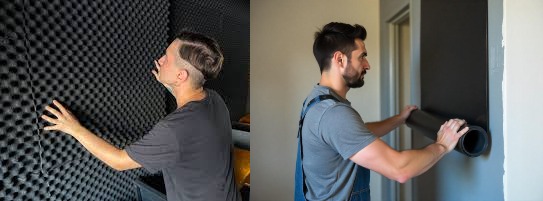
When it comes to creating a comfortable acoustic environment, one of the most crucial decisions is selecting the right Acoustic Material. Whether it’s a recording studio, an office, a classroom, or a residential setup, managing noise and controlling sound reflections can make all the difference. Two of the most widely used solutions in this space are Sound Insulation Foam and Sound Insulation Sheets. Both materials serve the purpose of improving sound quality and reducing unwanted noise, but their composition, application, and performance differ significantly.
This article explores these two materials in depth—what they are, how they work, where they should be used, and which one suits your project best.
Understanding Sound Insulation and Acoustic Performance
Before diving into the comparison, it’s essential to understand what sound insulation truly means. Sound insulation refers to the reduction of sound transmission from one space to another. This is achieved by introducing barriers that absorb, block, or dampen sound waves. The selection of Acoustic Material depends on whether your goal is to absorb sound (reduce echoes and reverberations) or block sound (prevent noise transmission).
Both Sound Insulation Foam and Sound Insulation Sheets contribute to this goal but in different ways.
What is Sound Insulation Foam?
Sound Insulation Foam is a lightweight, porous material designed primarily for sound absorption. It works by converting sound waves into small amounts of heat through friction within its open-cell structure. These foams are commonly made from polyurethane or melamine and are available in various textures and thicknesses.
Key Characteristics of Sound Insulation Foam:
- Sound Absorption Efficiency: Excellent for managing mid to high-frequency sounds.
- Flexible Design Options: Available in wedge, pyramid, or egg-crate patterns, making them ideal for acoustic panel installations
- Lightweight and Easy to Install: Can be applied to walls, ceilings, and even inside equipment enclosures.
- Best For: Recording studios, conference rooms, call centers, home theatres, and music rehearsal spaces where clarity of sound is critical.
However, it’s important to note that Sound Insulation Foam mainly helps in reducing internal echo and reverberation. It does not act as a strong barrier for blocking external noise from entering or leaving a room.
What are Sound Insulation Sheets?
On the other hand, Sound Insulation Sheets are dense, high-mass materials that focus on sound blocking rather than absorption. These sheets are often made of materials like rubber, vinyl, or mineral wool composites and are designed to add mass and density to surfaces, preventing sound waves from passing through.
Key Characteristics of Sound Insulation Sheets:
- High Density and Durability: Provides superior resistance to noise transmission across walls, floors, and ceilings.
- Excellent for Low-Frequency Sounds: Ideal for environments where vibration or structural noise is a concern.
- Versatile Application: Can be layered within walls, under flooring, or beneath drywall systems.
- Best For: Industrial setups, mechanical rooms, home theatres adjacent to noisy areas, and offices near traffic or factory zones.
Unlike foams, Sound Insulation Sheets are not typically visible once installed, as they’re often embedded within structural layers.
The Core Difference: Absorption vs. Blocking
The simplest way to differentiate between Sound Insulation Foam and Sound Insulation Sheets lies in their acoustic purpose and application.
1. Primary Function
While Sound Insulation Foam focuses on sound absorption, helping to reduce echoes and reverberation within a space, Sound Insulation Sheets are designed for sound blocking, preventing noise from traveling between areas.
2. Material Composition:
The foam typically features open-cell structures made from materials like polyurethane or melamine, which trap and absorb sound waves. On the other hand, insulation sheets are built with dense layers of materials such as rubber, vinyl, or fiber, which act as effective barriers against sound transmission.
3. Frequency Range:
Foams work best at mid to high frequencies, making them ideal for controlling indoor sound reflections. However, Sheets are more efficient in handling low to mid frequencies, effectively reducing structural noise.
4. Installation Area:
Sound Insulation Foam is usually applied on exposed surfaces like walls and ceilings for both performance and aesthetics. In contrast, Sound Insulation Sheets are installed within hidden layers such as walls, floors, or partitions to form part of the building’s soundproofing structure.
5. Aesthetic Role:
Acoustic foam often adds a visual appeal to interiors, complementing design themes, whereas insulation sheets function purely as structural sound barriers with no visible design impact.
6. Weight:
Foams are lightweight and easy to handle, while sheets are heavier and denser, contributing to their superior sound-blocking properties.
7. Ideal Use:
When the goal is echo control and better sound clarity within a room, foam is the right choice. For noise isolation between different spaces, insulation sheets are the more effective solution.
Which One Should You Choose?
The decision between Sound Insulation Foam and Sound Insulation Sheets depends entirely on your specific acoustic challenge.
If your concern is echo reduction and speech clarity, foam panels are the go-to choice. They enhance sound quality within a space by reducing reflections, making conversations, recordings, and presentations clearer.
However, if your priority is noise isolation for keeping unwanted sound out or containing sound within a space, then Sound Insulation Sheets are the better option. Their density makes them perfect for separating spaces acoustically and achieving a higher Sound Transmission Class (STC) rating.
- Still unsure which material suits your project best?
Contact us for expert consultation on choosing the right Acoustic Material for your interiors. Our team can guide you with detailed specifications and customized recommendations.
Installation Considerations
For Sound Insulation Foam:
- Should be installed on exposed walls or ceilings using adhesive or mounting clips.
- Avoid over-covering every inch because strategic placement yields better acoustic balance.
- Regular cleaning is recommended to prevent dust accumulation that can reduce performance.
For Sound Insulation Sheets:
- Installation often requires professional handling since sheets are heavy and may need structural integration.
- Can be sandwiched between gypsum boards, underlays, or partition systems for best results.
- Proper sealing of joints is crucial to prevent sound leakage.
If you have an upcoming interior or acoustic project, contact us today for technical assistance and on-site material recommendations to achieve the best soundproofing outcomes.
Performance and Longevity
Sound Insulation Foam typically lasts several years if maintained well, but it can degrade with moisture or UV exposure. It’s ideal for dry, temperature-controlled interiors.
Sound Insulation Sheets, being denser and more durable, offer long-term performance and require minimal maintenance once installed. Their resistance to impact and moisture makes them suitable even for industrial or outdoor-adjacent applications.
Budget and Project Suitability
Sound Insulation Foam is relatively affordable and easy to apply, making it a great choice for quick upgrades or small-to-medium spaces.
Sound Insulation Sheets, while costlier, deliver higher acoustic isolation and durability, ensuring long-term value.
Think of foam as a performance enhancer and sheets as a sound barrier foundation. Combining both strategically can create a balanced acoustic system, absorption on the inside and insulation at the structure.
Expert Recommendation: Combine Both for Comprehensive Control
In many projects, the most effective approach is to use Sound Insulation Sheets within the walls or partitions to block external noise, and Sound Insulation Foam on the interior surfaces to absorb internal sound reflections. This dual-layered acoustic strategy enhances both comfort and clarity, achieving professional-grade results.
When combined, they not only create peaceful environments but also improve the perceived quality of the space whether it’s a corporate boardroom, a classroom, or a hospitality zone.
For detailed product options, specifications, and project-based guidance, reach out to our team. We specialize in offering the right Acoustic Material tailored to performance, design, and budget requirements.
Final Thoughts
Both Sound Insulation Foam and Sound Insulation Sheets serve distinct but complementary purposes in acoustic design. The choice depends on whether your primary goal is to absorb, block, or balance sound within your environment.
- Use foam for refinement of sound within a room.
- Use sheets for blocking noise transfer between rooms or structures.
- Use both for ultimate acoustic control and enhanced user comfort.
Sound is invisible yet powerful as it defines the comfort and quality of every space we occupy. By choosing the right Acoustic Material, you ensure not only functional performance but also emotional well-being through better acoustic balance.